
Medically reviewed by the clinical team at Immediate Care Center of Westmont · Published July 23, 2026 · Last reviewed July 23, 2026
When respiratory illness season arrives, four viruses tend to circulate at once: influenza (the flu), the common cold, COVID-19, and RSV. They share many symptoms, which makes it genuinely hard to know what you are dealing with based on how you feel alone. Yet the differences matter, because they affect how you treat the illness, how long you may be contagious, and who around you needs protecting. At Immediate Care Center of Westmont, our walk-in urgent care offers on-site testing for flu, COVID-19, and RSV so you can get a clear answer the same day. We serve patients of all ages throughout DuPage County, including Downers Grove, Hinsdale, Oak Brook, Darien, Clarendon Hills, Willowbrook, and La Grange. Here is how to tell these illnesses apart and when testing is worthwhile.
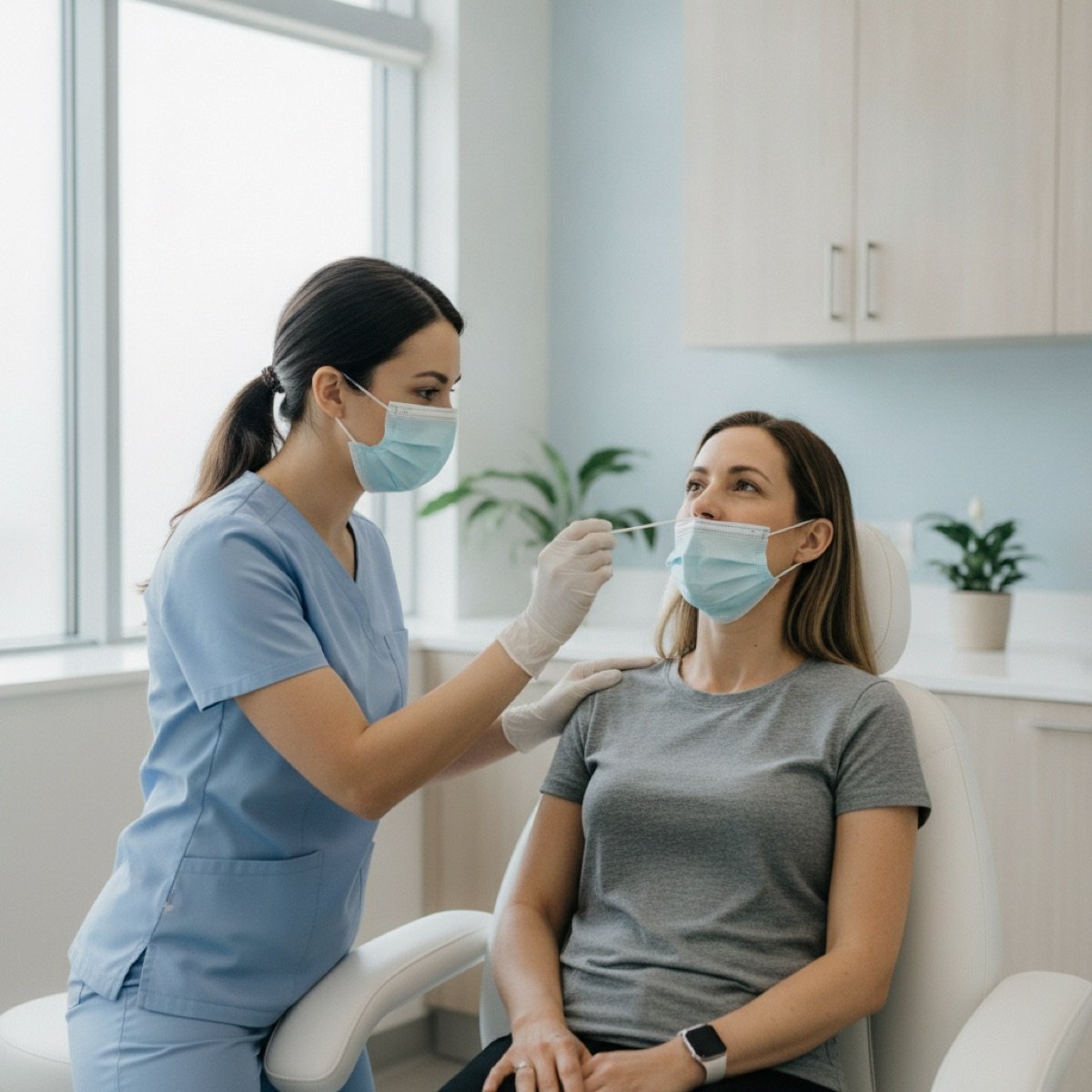
The flu, common cold, COVID-19, and RSV are all caused by respiratory viruses, and they all attack the nose, throat, and airways. As a result, they produce overlapping symptoms such as cough, congestion, sore throat, and fatigue. No single symptom reliably separates one from another, and the same virus can cause mild illness in one person and serious illness in another. Testing is the only way to know for certain which virus is responsible, which is why on-site rapid testing is so useful during the fall and winter months.
The common cold is usually the mildest of the four. It tends to come on gradually and centers on the nose and throat. Typical features include:
Colds seldom cause the intense body aches or high fevers seen with the flu, and they rarely lead to serious complications in healthy people. The CDC provides a helpful overview comparing cold and flu symptoms at the Centers for Disease Control and Prevention (CDC).
The flu tends to hit harder and faster than a cold. A defining feature is the sudden onset of symptoms, often over a matter of hours. Common flu symptoms include:
Because the flu can lead to complications such as pneumonia, and because antiviral treatment works best when started early, testing within the first day or two of symptoms can be especially helpful. Prompt diagnosis lets a provider decide whether antiviral medication is appropriate for you.
COVID-19, caused by the SARS-CoV-2 virus, can range from very mild to severe and shares many symptoms with the flu and cold. Features can include fever, cough, sore throat, congestion, fatigue, body aches, headache, and sometimes gastrointestinal symptoms. Symptoms typically appear a few days after exposure. Because COVID-19 has specific isolation guidance and, for some higher-risk patients, specific treatment options, confirming it with a test is valuable. A side-by-side comparison of COVID-19 and flu symptoms is available from Mayo Clinic.
RSV usually causes cold-like symptoms in healthy older children and adults, such as runny nose, cough, sneezing, and low-grade fever. What sets RSV apart is its risk to specific groups: it can cause serious lower-airway infections in infants, older adults, and people with chronic heart or lung disease. In babies, RSV may show up as fussiness, poor feeding, and fast or labored breathing rather than an obvious cold. Because RSV can be serious in these groups, testing helps confirm the cause and guide monitoring.

These general patterns can offer clues, though they are not a substitute for testing:
Because these signs overlap so heavily, the most reliable way to know what you have is a test.
Call 911 or go to the emergency room for any respiratory illness that causes trouble breathing or shortness of breath, chest pain or pressure, bluish lips or face, confusion or difficulty staying awake, severe or persistent dizziness, or signs of severe dehydration. In infants, watch for fast or labored breathing, the skin pulling in around the ribs, pauses in breathing, or unusual sleepiness, and seek emergency care right away.
Getting the right diagnosis does more than satisfy curiosity. It helps in several practical ways:
At our clinic, we can test for flu, COVID-19, and RSV during a single walk-in visit, often with rapid results, so you leave with a clear diagnosis and a plan.
Rapid respiratory testing is quick and straightforward. In most cases a provider collects a small sample with a gentle nasal swab, which is then run through a rapid test right in our on-site lab. Because the flu, COVID-19, and RSV can be checked from a single visit, you do not need to travel between different locations or wait days for outside lab results. When your test comes back, the provider will explain what it means, whether any treatment is recommended, how long you may be contagious, and what precautions will protect the more vulnerable people in your household. If your symptoms point to a different problem, such as strep throat or a sinus infection, we can evaluate for those as well during the same walk-in visit.
For most people with a mild viral respiratory illness, supportive care is the mainstay: rest, plenty of fluids, fever reducers or pain relievers as appropriate, and staying home to avoid spreading the illness. Most colds and mild cases of flu, COVID-19, and RSV improve within one to two weeks. Return for care, or seek emergency help, if symptoms worsen, breathing becomes difficult, or a high-risk person is affected.
Yes. It is possible to be infected with more than one respiratory virus at once, which is another reason testing can be helpful when symptoms are severe or confusing.
Testing early in the illness, ideally within the first couple of days of symptoms, is often most useful, especially for the flu and COVID-19, where early treatment decisions may depend on the result.
No. The cold, flu, COVID-19, and RSV are all caused by viruses, and antibiotics do not treat viruses. Antibiotics are only used if a separate bacterial infection develops, such as some cases of pneumonia or a sinus infection.
That depends on your symptoms and risk factors. Our providers can recommend testing for flu, COVID-19, RSV, or a combination based on your situation during your visit.
Stop guessing about your symptoms. Our walk-in team offers on-site flu testing, COVID testing, and RSV testing as part of complete urgent care for the whole family, backed by our on-site lab. No appointment is required, and you can check in online to save time. We are open Monday through Friday, 9 AM to 6 PM, and Saturday and Sunday, 9 AM to 5 PM. Have a question? Call us at (630) 324-6825.
This page is for general educational purposes and is not a substitute for professional medical advice. If you are experiencing a medical emergency, call 911.
Monday – Friday: 9:00 AM – 6:00 PM
Saturday – Sunday: 9:00 AM – 5:00 PM

These settings are saved on this device only.