Cough, runny nose and wheezing can signal RSV. Urgent Care Center of Westmont offers nasal swab RSV testing for children and adults at our Westmont, IL clinic, plus guidance on care at home. Same-day walk-in visits, no appointment needed.
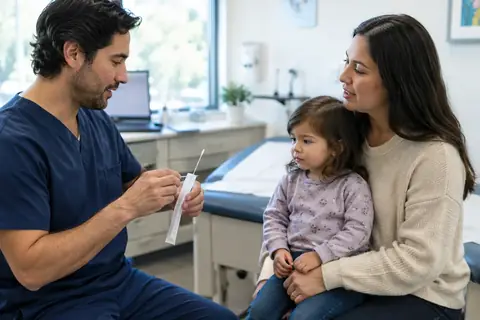
Respiratory syncytial virus (RSV) is a common virus that causes cold-like symptoms. Most people get better in a week or two, but RSV can be serious for infants, older adults and people with heart or lung disease. Urgent Care Center of Westmont, also known as Immediate Care Center of Westmont, offers nasal swab RSV testing. Our team is led by board-certified physicians.
If you or your child has cough, congestion, fever or wheezing, walk in or check in online at our Westmont, IL clinic. If a baby is struggling to breathe, call 911.
Key facts
The CDC recommends a single RSV vaccine dose for everyone 75 and older and for adults 50 to 74 at increased risk.
The adult RSV vaccine is not a yearly shot; late summer to early fall is the recommended time to get it.
Babies can be protected by an RSV vaccine given during weeks 32 to 36 of pregnancy or by an antibody shot for infants under 8 months; most babies do not need both.
A nasal swab at Urgent Care Center of Westmont in Westmont, IL can check for RSV, and for flu or COVID-19 when symptoms overlap.
RSV Symptoms
The CDC lists these symptoms, which usually appear 4 to 6 days after infection and often come in stages, not all at once:
Runny nose and congestion
Decreased appetite
Coughing and sneezing
Fever
Wheezing
Very young infants may only show irritability, less activity and breathing difficulties.
Who Is at Higher Risk
Per the CDC and MedlinePlus, RSV is more likely to be serious for:
Infants, especially premature babies, and some young children
Adults 65 and older
People with chronic heart or lung disease, such as COPD or asthma
People with weakened immune systems
Nearly all children have had RSV by age 2. Vaccines are available for some older adults and during pregnancy, and preventive shots exist for infants. Ask your doctor what fits your family.
How We Test and Care for RSV at Our Westmont, IL Clinic
Read moreClose
Your clinician reviews symptoms, listens to the lungs and checks breathing. A nasal swab can test for RSV. Because symptoms overlap, we can also test for flu or COVID-19. If pneumonia is a concern, a chest X-ray is available at our main clinic on Cass Ave.
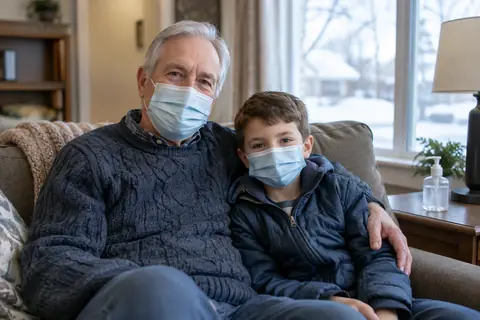
The CDC says antiviral medicine is not routinely recommended for RSV. Care focuses on comfort: fever and pain relief, plenty of fluids and rest. We explain what to watch for at home. The CDC advises staying home until you have been fever-free for 24 hours without fever medicine and symptoms are improving.
We accept most major plans, including Blue Cross Blue Shield, BCBS Medicaid Community, Cigna, Humana, UnitedHealthcare, Medicare, Meridian and CountyCare. Call (630) 324-6825 to confirm coverage. See our cost and insurance page, or review our self-pay urgent care services, with flat upfront pricing and general visits from $125.
RSV vs. a cold vs. flu vs. COVID-19
Read moreClose
Symptoms overlap a lot, which is why testing can help
Clue
RSV
Common cold
Flu
COVID-19
Typical start
Symptoms come in stages
Gradual
Sudden
Gradual or sudden
Key signs
Runny nose, cough, fever, wheezing, poor appetite
Runny nose, sneezing, sore throat
Fever, body aches, tiredness, cough
Fever, cough, tiredness; sometimes loss of taste or smell
Higher risk
Infants, adults 65 and older, heart or lung disease
A maternal RSV vaccine can be given during weeks 32 to 36 of pregnancy, from September through January in most of the U.S. Protection passes to the baby for about 6 months after birth.
If the mother did not get the vaccine, an RSV antibody shot is recommended for babies under 8 months, usually given shortly before RSV season or within a week of birth for babies born October through March.
A small group of higher-risk children ages 8 to 19 months may get an antibody shot before their second RSV season.
For adults 50 and older
Everyone 75 and older should get one RSV vaccine dose, per the CDC.
Adults 50 to 74 should get it if they have a higher risk, such as chronic heart or lung disease, a weakened immune system, or living in a nursing home.
It is a single dose, not a yearly shot. The CDC says protection lasts at least two years.
August through October is the recommended window in most of the continental U.S., before RSV spreads.
Ask your pediatrician or obstetrician about infant protection, and call (630) 324-6825 to ask about adult vaccines. See immunizations.
Home care that helps
Read moreClose
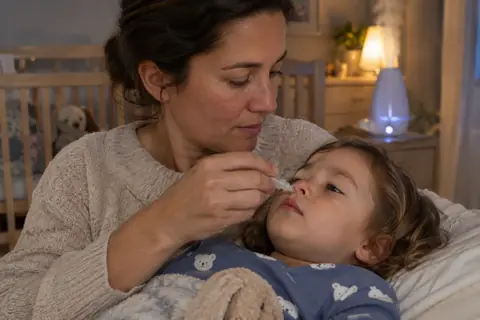
Offer fluids often. Small, frequent sips or feeds are easier for a congested child.
Use saline drops and gentle suction to clear a baby's nose before feeds and sleep.
Run a cool-mist humidifier in the bedroom.
Use fever and pain medicine made for your child's age and weight. Never give aspirin to children.
Keep sick children home until they have been fever-free for 24 hours without medicine and are improving, as the CDC advises.
Our fever return guide can help you decide when it is time for school or daycare. Walk in or check in online if symptoms are not improving.
With a swab of nasal fluid that is tested for the virus.
How long is someone with RSV contagious?
MedlinePlus says people are usually contagious for 3 to 8 days. People with weak immune systems can spread it longer.
Is there a treatment for RSV?
There is no routine antiviral. Care focuses on fluids, fever relief and watching breathing.
Do I need an appointment?
No. Walk in or check in online .
Is the RSV vaccine a yearly shot?
No. For adults, the CDC says the RSV vaccine is a single dose and is not currently given every year. If you already had one, you do not need another one now. Protection lasts at least two years.
Can my baby get the RSV shot?
Yes, if your baby is under 8 months and the mother did not get the RSV vaccine during pregnancy. The CDC recommends an RSV antibody shot for these infants, usually before or early in RSV season. Most babies do not need both the maternal vaccine and the antibody. Ask your pediatrician.
When is RSV season in Illinois?
RSV usually spreads in the fall and winter, overlapping with flu season. The CDC suggests adults who need the vaccine get it in late summer or early fall, roughly August through October in most of the continental U.S.
Should adults get tested for RSV?
Testing is most useful when the result will change your care, such as for older adults, people with heart or lung disease, or when it helps tell RSV apart from flu or COVID-19. Your clinician will recommend a test if it makes sense for you.
“I sprained my ankle so I went looking for an urgent care in my area. I came to this one, and I’m glad I did because everyone was nice and thoughtful! It was quick and simple process and I’d definitely recommend to anyone who needs help.”
Yahia H. · July 2026 · Google★★★★★
“Everyone was so comforting, and spoke to me intelligently. The cost was very manageable. I will be returning for future health needs!”
Rumpel F. · June 2026 · Google★★★★★
“The staff was very professional Easy to talk to and very knowledgeable. I would recommend. & return 5 ⭐️”