Need a COVID-19 test in Westmont, IL? Urgent Care Center of Westmont offers walk-in COVID-19 testing seven days a week, with rapid antigen and PCR options and a clinician to explain your result. Same-day walk-in visits, no appointment needed.
Urgent Care Center of Westmont offers walk-in COVID-19 testing seven days a week: Mon–Fri 9 AM–6 PM and Sat–Sun 9 AM–5 PM. You can walk in or check in online before you arrive. We offer rapid antigen and PCR testing, and a clinician can help you choose the right test. Urgent Care Center of Westmont is also known as Immediate Care Center of Westmont, and our team is led by board-certified physicians.
The CDC recommends testing if you have symptoms of COVID-19 or think you were exposed. Testing tells you whether to take steps to protect others, and whether you may benefit from treatment if you are at higher risk.
Key facts
COVID-19 antiviral treatment must start within 5 to 7 days of when symptoms begin, depending on the medicine (CDC).
Adults 75 and older and people with conditions such as chronic lung disease, heart disease or a weakened immune system should ask about treatment early.
Symptoms can return 3 to 7 days after recovery, called rebound; CDC says it is usually mild.
Before using an old home test, check the FDA list, since some expiration dates have been extended.
Who Should Get a COVID-19 Test
Get tested at our Westmont, IL clinic if you:
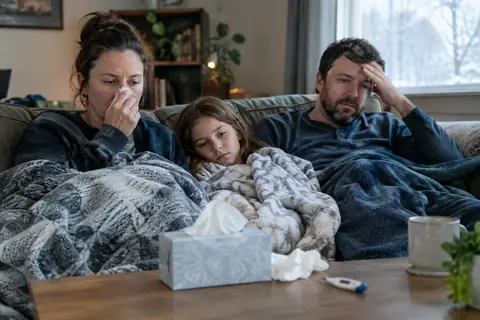
Have symptoms such as fever or chills, cough, sore throat, congestion, body aches, headache, fatigue, or new loss of taste or smell
Were around someone with COVID-19
Are at higher risk for severe illness (for example, age 65 or older or a weakened immune system) and have any symptoms
Need a test before being around people at higher risk
The CDC notes symptoms can appear 2 to 14 days after exposure. If you had COVID-19 in the past 30 days and have no symptoms, the CDC says testing is not recommended to detect a new infection.
COVID-19 Test Types Explained
The CDC describes two main kinds of tests for a current infection:
PCR (NAAT) tests: lab-based molecular tests. The CDC calls them the "gold standard" because they are more likely to detect the virus.
Rapid antigen tests: quicker to run, but less sensitive. A single negative antigen test does not rule out infection. The FDA recommends repeat antigen testing: 2 tests 48 hours apart if you have symptoms, or 3 tests 48 hours apart if you do not.
Both use a swab from the nose. Your clinician will help you pick the test that fits your situation.
Walk-In Hours, Online Check-In and Locations
Read moreClose
Both locations are open Mon–Fri 9 AM–6 PM and Sat–Sun 9 AM–5 PM and welcome walk-ins:
Urgent Care Center of Westmont, 29 N Cass Ave, Ste A, Westmont, IL 60559
Immediate Care Center of Westmont Inside Jewel-Osco, 4 E Ogden Ave, Westmont, IL 60559
To save time, check in online before your COVID-19 test. Questions? Call (630) 324-6825. If you need a written copy of your result for work or school, ask our front desk during your visit.
If You Test Positive or Negative
Read moreClose
Positive: You have or recently had an infection. The CDC advises staying home and away from others until you have been fever-free for 24 hours without fever medicine and your symptoms are improving, then taking extra precautions for the next 5 days. If you are at higher risk, ask your clinician about treatment options right away.
Negative: A negative test, especially an antigen test, does not fully rule out infection. Follow repeat-testing guidance and keep watching for symptoms.
Related Testing, Nearby Communities and Cost
Read moreClose
Symptoms often overlap with other illnesses. Related services:
We accept most major insurance plans, including Blue Cross Blue Shield, Cigna, Humana, UnitedHealthcare, Medicare and CountyCare. Call (630) 324-6825 to confirm your coverage for testing, or see our COVID-19 testing insurance and cost page. Without insurance, our self-pay urgent care pricing is flat and upfront, with general visits from $125.
What happens at your COVID-19 testing visit
Read moreClose
Check inWalk in or check in online. Tell us your main symptoms and the day they started.
Health reviewYour clinician asks about exposures, vaccines, health conditions and every medicine you take, since some COVID-19 treatments interact with other drugs.
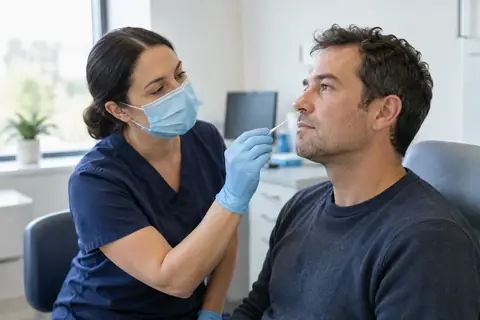
SwabA nasal swab is collected for a rapid antigen or PCR test, based on what fits your situation.
ExamThe clinician listens to your lungs and checks your throat and ears, and may test for flu, strep or RSV at the same visit.
PlanYou get your result explained, home care advice, and treatment options if you are at higher risk.
Home test or clinic test?
Read moreClose
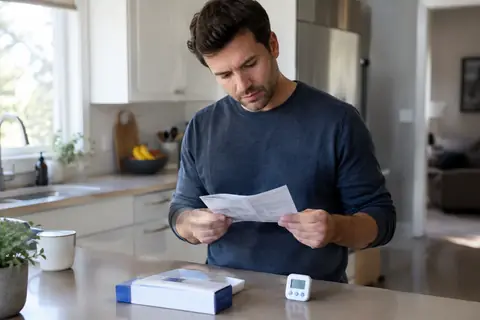
At-home antigen test
Handy for a quick check at home
Can miss early infection, so a negative is not the final word
FDA advises repeat testing: 2 tests over 3 days with symptoms, 3 tests over 5 days without
Check the FDA list for extended expiration dates
Clinic visit
PCR option, which CDC says is more likely to detect the virus
A clinician checks how sick you are, not only the test line
Flu, strep or RSV can be tested at the same visit when needed
Treatment options discussed if you are at higher risk
If you are at higher risk, timing matters
Read moreClose
CDC lists three antiviral medicines for COVID-19, and treatment must start within 5 to 7 days of the first symptoms, depending on the medicine. That window is short, so get tested as soon as symptoms begin if any of these apply to you:
You are 75 or older
You are not up to date on COVID-19 vaccines
You have chronic lung disease, heart disease or another long-term condition
You have a weakened immune system
Bring a full list of your medicines and supplements. CDC notes that one common oral antiviral is more likely than the others to interact with other drugs. Our clinicians can talk with you about whether treatment fits, which may include prescription medicine when appropriate.
No. Walk in at either Westmont, IL location, or check in online first.
Which test is more accurate, PCR or rapid?
The CDC says PCR (NAAT) tests are more likely to detect the virus. Rapid antigen tests are faster but may need to be repeated.
When should I test after an exposure?
Test if symptoms start. The CDC notes symptoms can appear 2 to 14 days after exposure. Ask your clinician about timing for your situation.
Can I get tested for flu and COVID-19 at the same visit?
Yes. Tell us your symptoms and your clinician will decide which tests make sense.
Can I use an expired home COVID test?
Check first. The FDA has extended the expiration dates of many at-home COVID-19 tests and lists the updated dates by brand on its website. If your test's date has not been extended, go by the date on the box, since an expired test may not give accurate results.
What is COVID rebound?
CDC describes rebound as symptoms or a positive test that come back 3 to 7 days after you recovered or tested negative. It is typically mild, and studies have not shown a higher risk of severe illness. If symptoms return, take the same steps to protect others, and call us if you are worried.
How soon do I need to start COVID treatment?
Quickly. CDC says antiviral treatment must begin within 5 to 7 days of when symptoms start, depending on the medicine. If you are 75 or older, have a long-term health condition or a weakened immune system, get tested as soon as symptoms appear and ask about treatment.
My home test was negative but I still feel sick. Should I come in?
It can be worth it. The FDA advises repeat home testing after a negative result because antigen tests can miss early infection. A clinic visit adds a PCR option and a check for flu, strep or RSV, which can cause the same symptoms.
“I had to visit the clinic on a Saturday and they were super fast, clean, kind and got me in and out of there fast even with an almost full waiting room! Michael at the front desk was super helpful and went out of his way to make sure I was taken care of and comfortable until I could be seen by the doctor. Definitely 5 star care!!”
Kelly M. · July 2026 · Google★★★★★
“They was patient and efficient. The wait was not long either. I would definitely go back in the future.”
Cynithia C. · May 2026 · Google★★★★★
“The staff was incredibly welcoming, I felt super confident before getting three stitches and was in and out the building in 30 minutes tops. They are super professional!”