

There is a particular kind of bad day that goes like this: you feel awful, you find a clinic, you book online, you drive twenty minutes, and the front desk tells you they are out of network with your plan. Now you are still sick, further from home, and facing a bill you did not plan for.
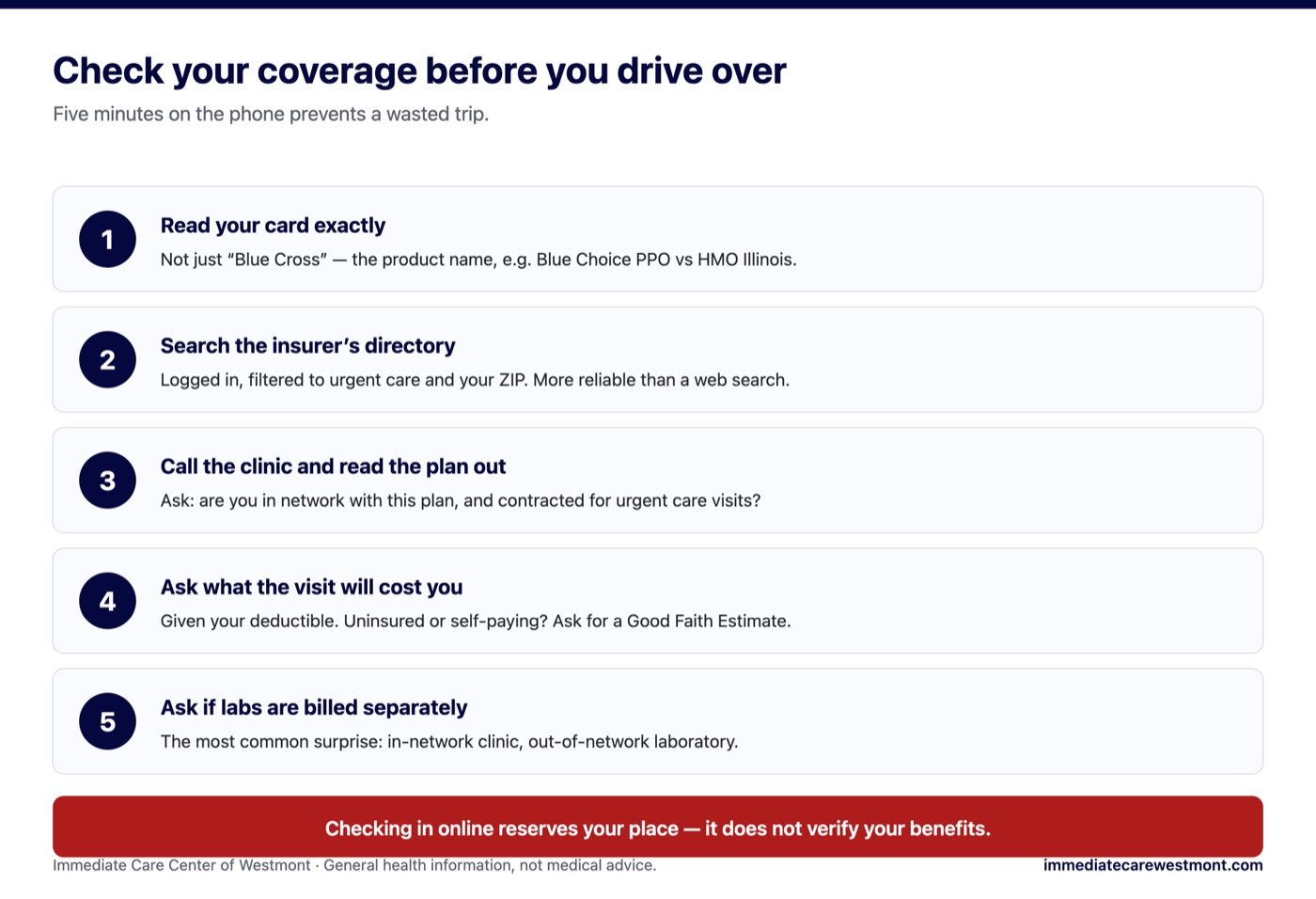
It is avoidable, and it takes about five minutes. This guide explains what “in network” actually means, exactly how to check before you leave the house, and what your options are if the answer is no.
An insurer signs contracts with clinics agreeing on set prices. A clinic that has signed one is in network: you pay the copay or coinsurance your plan specifies, and the negotiated rate applies. A clinic without that contract is out of network, and depending on your plan you may pay a much larger share — or, with many HMO plans, the entire bill.
Two distinctions decide most of the trouble:
One more thing worth knowing: urgent care and the emergency room are billed under completely different rules. An ER visit is subject to the federal No Surprises Act protections in an emergency; a scheduled or walk-in urgent care visit is not the same category. Our comparison of urgent care versus ER cost covers the price difference in detail.
Do not rely on a single source. Directories go stale, and a clinic can leave a network without the listing updating.
That last point catches more people than the clinic itself does. An in-network visit with an out-of-network lab still produces an unexpected bill.
It is not automatically the end of the conversation. Reasonable options:
If you are uninsured entirely, that is a normal and manageable situation — see what urgent care costs without insurance and our published self-pay pricing. You do not need insurance to be treated; our guide on whether you need insurance to visit immediate care addresses that directly.
Two federal protections are worth knowing by name:
For understanding your own plan’s terms, HealthCare.gov’s glossary is the clearest plain-English reference for deductible, coinsurance and out-of-pocket maximum.
CMS also publishes a plain-language summary of your medical bill rights, which is worth reading once before you need it.
We would rather answer this on the phone in two minutes than have you drive over and find out at the desk. Call (630) 324-6825 with your card in hand and ask about your specific plan — including whether we are contracted for urgent care under that product, and which laboratory your tests would go to.
If we are not in network with your plan, we will tell you plainly and give you the self-pay figure so you can make an informed choice. Both Westmont locations take walk-ins seven days a week, and you can check in online once you know where you stand.
If you are checking coverage because of an injury, these guides cover what treatment usually looks like: dog and animal bites, burns, and tetanus boosters.
No — and this catches people out. Online check-in reserves your place in line; it does not verify benefits. Coverage is confirmed by the clinic against your specific plan, which is why a phone call before you travel is worth the two minutes.
Frequently yes, but not always, and it depends on your plan’s out-of-network terms. Compare the self-pay rate against your plan’s out-of-network cost share rather than assuming.
Keep the date and the name of whoever you spoke with. Ask the clinic’s billing office to review it first — most discrepancies are coding issues resolved directly. If you are uninsured and were given a Good Faith Estimate that the bill exceeds by $400 or more, the federal dispute process applies.
Yes. Uninsured patients are seen routinely. Ask for the self-pay rate and a Good Faith Estimate up front so there are no surprises.
Many clinics send specimens to an outside laboratory that bills independently. The clinic being in network does not guarantee the lab is. Ask which lab is used and check that name against your directory too.
Five minutes on the phone with your card in your hand prevents the most avoidable bad outcome in walk-in care: getting there and being turned away while you feel terrible.
Call Immediate Care Center of Westmont on (630) 324-6825 to confirm your plan, then check in online to hold your place. If you are having a medical emergency, go to the nearest emergency department or call 911 — coverage questions come afterwards, and emergency protections exist precisely for that reason.
This article is general information about insurance and billing, not medical or legal advice, and it does not describe the terms of any specific plan. Confirm details with your insurer and with the clinic.
Monday – Friday: 9:00 AM – 6:00 PM
Saturday – Sunday: 9:00 AM – 5:00 PM

These settings are saved on this device only.