
Medically reviewed by the clinical team at Immediate Care Center of Westmont · Published July 23, 2026 · Last reviewed July 23, 2026
Respiratory syncytial virus, better known as RSV, is a common respiratory virus that causes cold-like symptoms in most people but can become serious in infants and older adults. Because early RSV can look just like a common cold, many families are unsure when a runny nose is nothing to worry about and when it is time to be seen and tested. At Immediate Care Center of Westmont, our walk-in urgent care offers on-site rapid RSV testing and same-day evaluation for patients of all ages across DuPage County, including Downers Grove, Hinsdale, Oak Brook, Darien, Clarendon Hills, Willowbrook, La Grange, and Villa Park. This guide explains RSV symptoms, who is most at risk, when testing makes sense, and the warning signs that mean you should seek emergency care.

RSV stands for respiratory syncytial virus. It is a very common contagious virus that infects the nose, throat, and lungs. Nearly all children catch RSV at least once by the age of two, and people can be reinfected throughout life. In the United States, RSV tends to circulate in the fall and winter, often overlapping with flu and COVID-19 season. For most healthy children and adults, RSV causes a mild, cold-like illness that resolves on its own within a week or two. The concern is that in certain groups, RSV can spread to the lower airways and lungs and cause serious illness. You can read more from the Centers for Disease Control and Prevention (CDC).
RSV symptoms usually appear about four to six days after exposure and tend to come on in stages rather than all at once. Typical symptoms include:
In healthy older children and adults, these symptoms are usually mild and similar to a common cold. The picture can be different in very young infants, who may not show typical cold symptoms at all.
In babies, especially those under six months, RSV can be harder to spot and more serious. Instead of an obvious cold, an infant with RSV may show:
RSV is a leading cause of bronchiolitis (inflammation of the small airways) and pneumonia in infants. The American Academy of Pediatrics offers helpful guidance for parents on recognizing when RSV is more than just a cold at HealthyChildren.org.
RSV is most serious in:
For these groups, an ordinary-seeming cold deserves closer attention, because RSV can progress to a lower respiratory tract infection that makes breathing difficult.
Not everyone with cold symptoms needs an RSV test, but testing can be valuable in specific situations. Consider being seen and tested when:
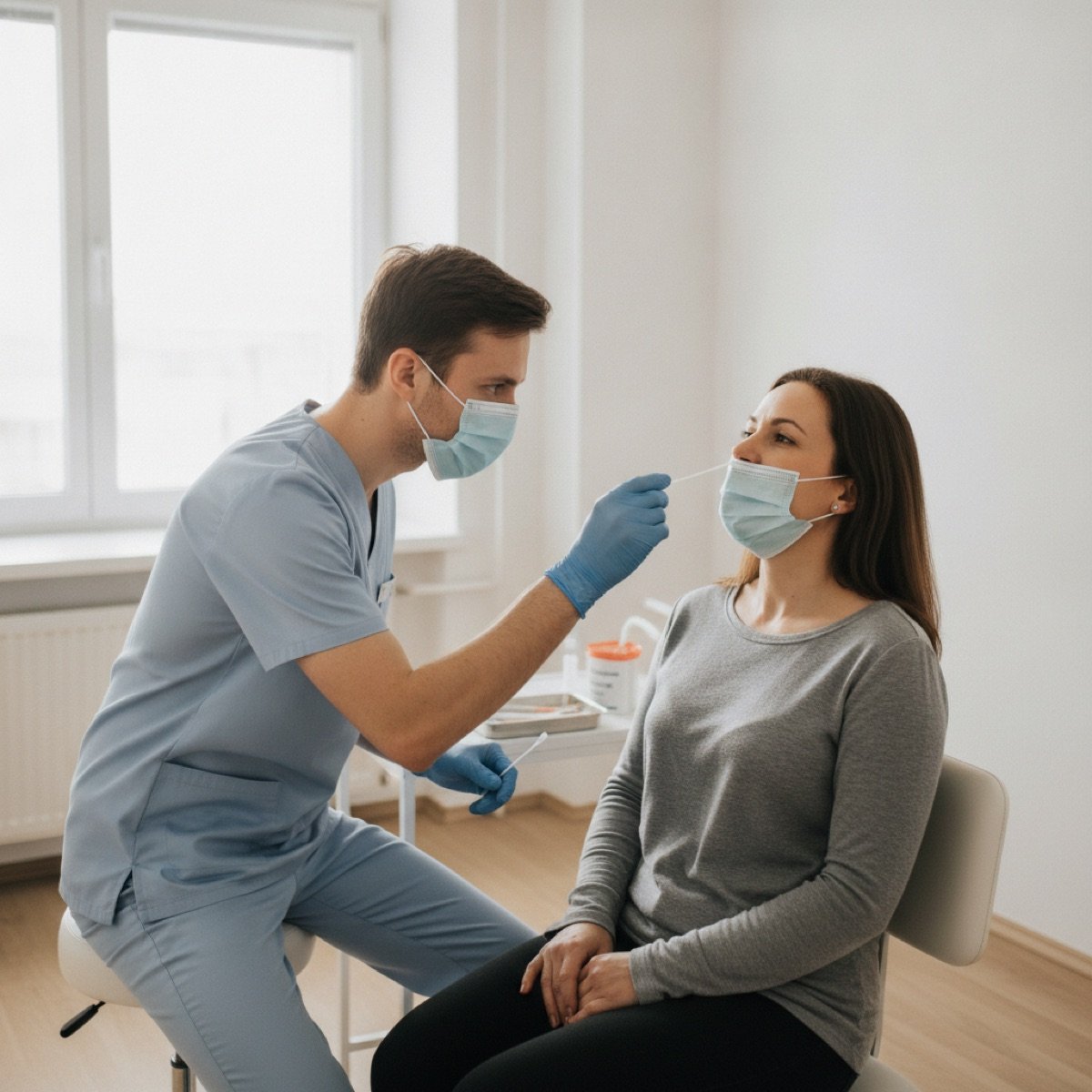
At our walk-in clinic, a rapid RSV test is performed with a simple nasal swab, and results are available quickly during your visit. Knowing whether RSV is the cause helps guide treatment, sets expectations for recovery, and helps protect infants and older adults in the household. Because RSV symptoms overlap so much with the flu and COVID-19, we can test for all three from the same visit when appropriate.
Call 911 or go to the nearest emergency room right away if you or your child has any of these breathing red flags:
There is no specific antiviral medication for most cases of RSV, so treatment focuses on comfort and supporting the body while the immune system clears the virus. Supportive care includes rest, plenty of fluids to stay hydrated, and measures to relieve congestion and fever. Most people recover at home within one to two weeks. The role of a medical visit is to confirm the diagnosis, check that breathing and hydration are safe, watch for complications such as bronchiolitis or pneumonia, and make sure high-risk patients get the right level of care. Our providers can evaluate the lungs, measure oxygen levels, and determine whether home care is appropriate or whether a higher level of care is needed.
RSV spreads through respiratory droplets and by touching contaminated surfaces. You can reduce the spread by washing hands often, covering coughs and sneezes, cleaning frequently touched surfaces, and keeping sick individuals away from infants and older adults when possible. Ask your regular healthcare provider about RSV immunization options that may be available for infants and older adults.
When you come in for a possible RSV infection, our provider will ask about the timeline of symptoms, review any risk factors such as age or chronic heart and lung conditions, and perform a focused exam. That exam usually includes listening to the lungs for wheezing or congestion, checking the breathing rate and effort, and measuring oxygen levels with a small clip on the finger. If testing is appropriate, a rapid RSV swab can be collected during the same visit, and because respiratory viruses look so similar, we may test for flu and COVID-19 at the same time. Based on the results and the exam, the provider will explain whether home care is safe, what warning signs to watch for, and when to return. For infants and older adults, this evaluation is especially valuable because it can catch early signs that the illness is moving into the lower airways before it becomes an emergency.
In healthy older children and adults, RSV often is indistinguishable from a common cold. The difference is who is affected and how it can progress: in infants, older adults, and people with heart or lung disease, RSV can move into the lower airways and cause serious breathing problems, which a common cold typically does not.
People with RSV are usually contagious for about three to eight days, though some infants and people with weakened immune systems can spread the virus longer. Careful handwashing and staying home while sick help limit spread.
No. RSV is a virus, and antibiotics do not treat viruses. Antibiotics are only used if a separate bacterial infection develops. Treatment for RSV is supportive, focusing on hydration, rest, and monitoring breathing.
Yes. RSV testing is not just for children. It is especially useful for older adults and anyone with chronic heart or lung conditions, and for distinguishing RSV from flu and COVID-19.
If you are worried about RSV for yourself or your child, our team can help the same day. We offer on-site RSV testing along with flu testing and COVID testing, supported by our on-site lab and full pediatric urgent care. No appointment is needed, and you can check in online to save time. We are open Monday through Friday, 9 AM to 6 PM, and Saturday and Sunday, 9 AM to 5 PM. Call us at (630) 324-6825 with any questions.
This page is for general educational purposes and is not a substitute for professional medical advice. If you are experiencing a medical emergency, call 911.
Monday – Friday: 9:00 AM – 6:00 PM
Saturday – Sunday: 9:00 AM – 5:00 PM
