
Medically reviewed by the clinical team at Immediate Care Center of Westmont · Published July 23, 2026 · Last reviewed July 23, 2026
You check the thermometer, see 102°F glowing back at you, and your heart skips. Is this an emergency? At Immediate Care Center of Westmont, our walk-in clinic in Westmont, IL reassures parents about this exact question almost daily. The short answer for most children over 3 months is that a 102°F fever, by itself, is usually not an emergency. What matters far more than the number is how your child looks, acts, and feels — and whether any specific warning signs are present. This guide explains how to tell the difference and when to head to our pediatric urgent care or the ER.
We serve DuPage County families across Downers Grove, Hinsdale, Oak Brook, Darien, Clarendon Hills, Willowbrook, La Grange, and Villa Park, with on-site lab testing and digital X-ray to find the cause of a fever the same day.

A true fever is defined as a temperature of 100.4°F (38°C) or higher. So 102°F is a genuine, moderate fever. But here is the part that surprises many parents: the height of a fever is a poor predictor of how serious the underlying illness is. Common childhood viruses routinely push temperatures to 102°F or 103°F, while some serious infections cause only a mild fever. Your child’s body is capable of running a fever in this range as a normal, healthy immune response to an ordinary cold or flu.
This is why pediatricians repeat one core message: treat the child, not the thermometer. A child with a 102°F fever who is still drinking, alert, and playing between doses of fever medicine is usually in much better shape than a child with a 100.6°F fever who is limp, unresponsive, or struggling to breathe.
For any infant under 3 months old, a temperature of 100.4°F (38°C) or higher is always a medical emergency — and 102°F absolutely qualifies. Do not give fever medicine and wait. Call your pediatrician immediately or go straight to the nearest emergency room. In a young baby, fever can be the only sign of a serious infection, and these infants need prompt, specialized evaluation.
For everyone older than 3 months, the assessment shifts from the number to the whole picture, which we walk through next.
When judging a 102°F fever in a child over 3 months, ask yourself how they are behaving. Reassuring signs include a child who:
Concerning signs — the ones that should prompt a visit even at the same temperature — include a child who is unusually drowsy, will not drink, is inconsolable, or simply seems “not right” to you. Parental instinct is a legitimate and important data point.
Bring your child to Immediate Care Center of Westmont, or call your pediatrician, if a 102°F fever comes with:
Our on-site lab (strep, flu, RSV, UTI, bloodwork) and digital X-ray let us diagnose and begin treating many of these causes in a single walk-in visit — a faster, more affordable path than the emergency room for issues that are not true emergencies.
Call 911 or go to the nearest emergency room if a fever — at 102°F or any temperature — comes with any of these:
These signs point to problems that go beyond a routine fever and need immediate care. When in doubt about breathing, responsiveness, or a spreading rash, do not wait — call 911.
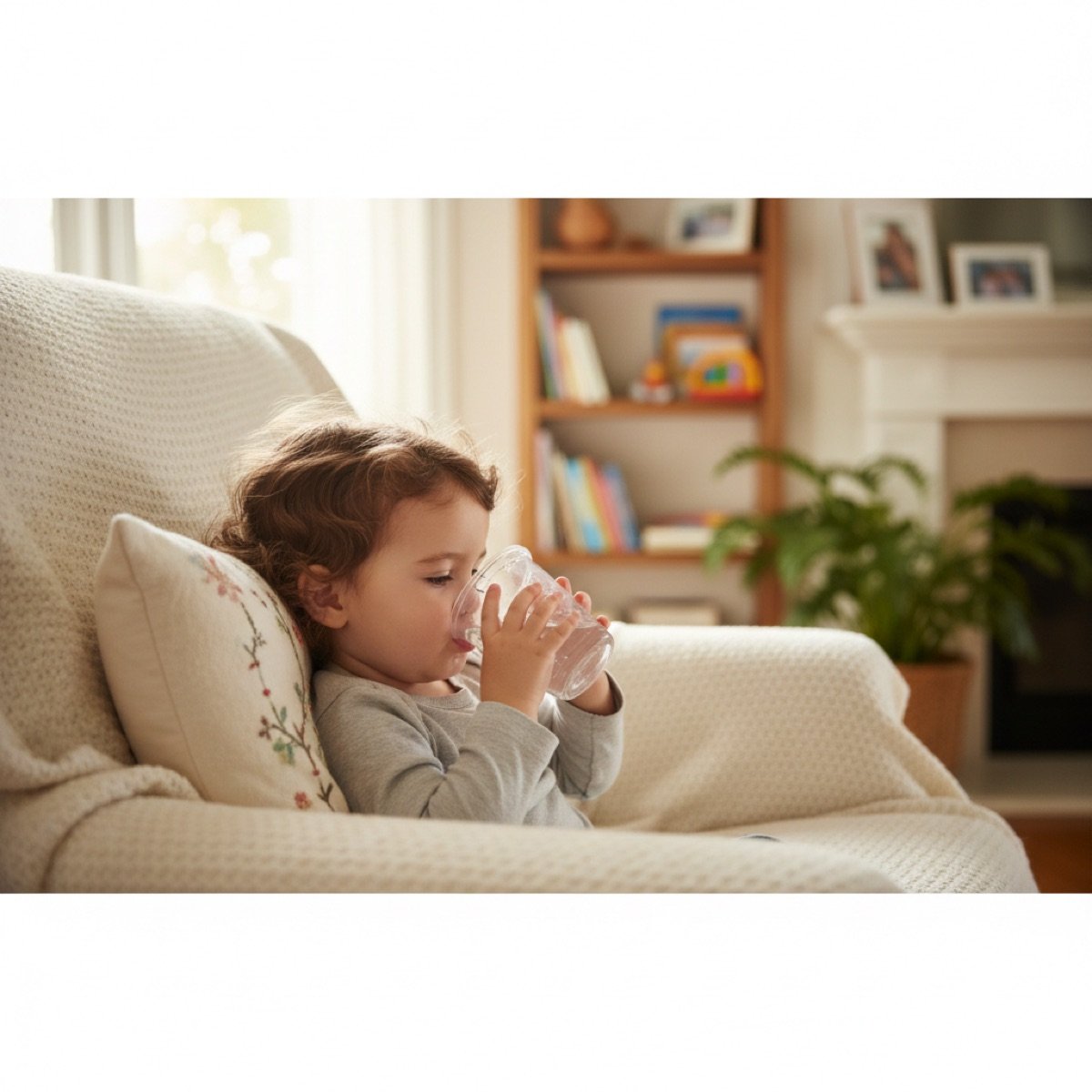
If your child has a 102°F fever but is otherwise doing okay, comfort is the goal:
Remember that the purpose of fever medicine is to help your child feel more comfortable, not to force the temperature down to a “perfect” number.
Because behavior and trend matter more than any single reading, a short log helps you — and helps our clinicians if you come in. Jot down a few things each time you check:
This record turns a stressful night into useful information. It shows whether the fever is trending down, holding steady, or climbing, and whether new symptoms are pointing to a specific cause we can test for, such as strep, flu, RSV, or a urinary tract infection.
It can be reassuring to understand what a fever is doing. When the body detects an infection, the brain’s internal thermostat raises the temperature on purpose. This mild heat makes the body a less hospitable environment for many viruses and bacteria and helps the immune system work more efficiently. In other words, a 102°F fever is often a sign that your child’s defenses are switched on and functioning. That is why the aim of home care is comfort and hydration, not chasing the thermometer down to exactly 98.6°F. A child who is resting comfortably at 101°F does not need to be woken for another dose of medicine simply to lower a number.
No. Fevers from illness in the range typical of common infections do not cause brain damage. The body has built-in mechanisms that keep an illness-driven fever from climbing to genuinely dangerous levels. (Overheating from being trapped in a hot car is a different, dangerous situation — that is heatstroke, not a fever.)
A febrile seizure is frightening but often not harmful. Still, any first seizure, a seizure lasting more than 5 minutes, or trouble breathing afterward is a 911 emergency. After a first febrile seizure, your child should be evaluated promptly.
Usually no. Restful sleep is more valuable than a lower number. If your child is sleeping comfortably, let them rest and treat discomfort when they wake.
Yes. We are a walk-in urgent care, and no appointment is required. Checking in online first can shorten your wait.
A 102°F fever is usually manageable, but you do not have to guess alone. Our walk-in clinic is open Monday through Friday, 9 AM to 6 PM, and Saturday and Sunday, 9 AM to 5 PM. Call (630) 324-6825 with questions, or check in online to save time. Learn more on our pediatric urgent care and urgent care pages, or see our cost and insurance details.
For trusted guidance on childhood fevers, see Nemours KidsHealth and Cleveland Clinic.
This page is for general educational purposes and is not a substitute for professional medical advice. If you are experiencing a medical emergency, call 911.
Monday – Friday: 9:00 AM – 6:00 PM
Saturday – Sunday: 9:00 AM – 5:00 PM

These settings are saved on this device only.