Fever: what it means, home care and when to get checked
A fever is usually a sign your body is fighting an infection, most often a virus. Most clinicians count 100.4°F (38°C) or higher as a fever. Rest and fluids help. Urgent Care Center of Westmont in Westmont, IL can look for the cause when a fever lasts or worries you.
Most clinicians count a temperature of 100.4°F (38°C) or higher as a fever.
A fever is usually not harmful by itself and shows the immune system is working.
Fevers from common infections usually pass within 3 to 4 days.
A child under 2 with a fever lasting more than 24 hours should be checked by a doctor.
Never give aspirin to children or teens because of the risk of Reye's syndrome.
What temperature counts as a fever?
A fever is a temporary rise in body temperature. Normal temperature changes from person to person and through the day. It is usually highest in the evening. The number that counts as a fever also depends on where you take it.
Fever readings by thermometer type
Where you measure
Fever in a child (MedlinePlus)
How accurate
Rectal (bottom)
100.4°F (38°C) or higher
Most accurate
Mouth (oral)
99.5°F (37.5°C) or higher
Most common method for adults and older kids
Under the arm
99°F (37.2°C) or higher
Least accurate
Ear or forehead
Ear reads about 1°F higher than the mouth; forehead about 1°F lower
Varies by device
For adults, most clinicians use 100.4°F (38°C) by mouth. Cleveland Clinic calls 99.5°F to 100.3°F a low-grade fever. Use a digital thermometer. Glass mercury thermometers are no longer recommended.
What usually causes a fever?
Infections cause most fevers. Here are the usual causes, listed roughly from most to least common.
Viral infections, such as colds, flu, COVID-19 and RSV. These are very common and usually clear on their own.
Bacterial infections, such as strep throat, ear and sinus infections, pneumonia, urinary tract infections and skin infections.
Stomach bugs (gastroenteritis), often with vomiting or diarrhea.
Vaccines and teething. A low-grade fever for a short time after some shots is common. Teething can cause a mild rise.
Less common causes, such as inflammatory or autoimmune diseases, some medicines, blood clots and some cancers.
Allergies, including hay fever, typically do not cause a fever. If you have a fever with sneezing and a stuffy nose, an infection is more likely.
How to tell what is behind a fever
Read moreClose
The other symptoms that come with a fever are the most useful clue. This table shows common pairings and where to read more.
Lung exam, sometimes a chest X-ray. See our cough guide
Vomiting and diarrhea
Stomach bug
Exam and a check for dehydration
The CDC notes that flu usually starts suddenly, while a cold comes on slowly, and that not everyone with flu has a fever.
Home care for a fever, and how long to wait
Read moreClose
Treat the person, not the number. The goal of medicine is to feel more comfortable, not to bring the temperature back to normal. MedlinePlus and Cleveland Clinic suggest:
Rest, and drink plenty of fluids such as water, soup, ice pops and gelatin. For young children, avoid lots of juice or sports drinks.
Dress in light clothes and use light bedding.
A lukewarm bath can help. Avoid cold baths, ice and alcohol rubs.
For a mild fever under 101°F (38.3°C), medicine is often not needed.
Acetaminophen can be taken every 4 to 6 hours and ibuprofen every 6 to 8 hours. Follow the label and dose children by weight.
Do not give ibuprofen to babies 6 months or younger. Ask a clinician before giving any medicine to a baby 3 months or younger.
Never give aspirin to anyone under 17.
How long to wait: fevers from common infections usually pass within 3 to 4 days. Adults should get checked if a fever lasts more than 2 to 3 days. Children under 2 should be checked if a fever lasts more than 24 hours, and older children if it lasts more than 3 days.
When should you go to urgent care for a fever?
Read moreClose
Urgent care is a good fit when the person is awake, breathing comfortably and drinking, but the fever is lasting, high or paired with other symptoms. Come in if:
Adults
A fever lasts more than 2 to 3 days
A fever stays at or rises above 103°F (39.4°C)
A fever comes with a sore throat, earache, cough, sinus pain or pain when you pee
You have a long-term illness, a weak immune system, or recently traveled abroad
Fevers keep coming back over a week or more, even mild ones
Children
A baby 3 to 12 months old has a fever of 102.2°F (39°C) or higher
A child under 2 has had a fever for more than 24 hours
A child 2 or older has had a fever for more than 3 days
Your child still acts sick after the fever comes down, or seems to be getting worse
A fever comes with ear pain, a sore throat, burning when peeing or an unexplained rash
Babies younger than 3 months are different. Any fever at that age needs prompt medical care. Check the warning signs at the bottom of this page first.
Urgent Care Center of Westmont, also known as Immediate Care Center of Westmont, is open 7 days at two Westmont, IL clinics. Our team is led by board-certified physicians.
History and vital signsWe take your temperature and ask how long the fever has lasted, what medicine you took and when, and what other symptoms you have.
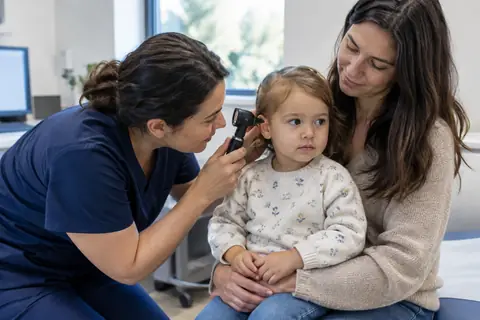
ExamYour clinician checks the ears, throat, lungs, belly and skin to look for a source.
Tests that fit your symptomsOptions include nose swabs for flu A and B, COVID-19 and RSV, a rapid strep test, a urine test and blood work through our lab. If pneumonia is a concern, a chest X-ray is available at our 29 N Cass Ave clinic only.
A clear planYour clinician explains the likely cause and the next steps. Treatment may include prescription medicine when appropriate, such as an antiviral for flu, which works better when started early.
Many insurance plans are accepted, and self-pay visits start from $125. Our pediatric urgent care page explains how we care for children.
Fever in babies, children and adults
Read moreClose
Babies under 3 months
A young baby's immune system is still new. Take the temperature rectally and call your pediatrician right away for any fever. Read more in baby fever: when to worry.
Children
The American Academy of Pediatrics says fever itself is usually not harmful. How your child acts matters more than the number. A child who plays and drinks after a dose of fever medicine is a good sign. Treat fever when it causes discomfort, often around 102°F (39°C) or higher. Watch for fewer wet diapers or less peeing, a sign of dehydration.
Adults
Most adult fevers under 103°F (39.4°C) are not dangerous by themselves, according to Cleveland Clinic. Adults who have a serious long-term illness, a weak immune system or a new rash should get any fever checked.
Going back to school or work
Many schools ask that children be fever-free for 24 hours without fever medicine before returning. Use our fever return guide or read about the 24-hour fever rule.
How to prevent fevers from common infections
Read moreClose
Wash hands often with soap and water, especially before eating.
Get a yearly flu vaccine and stay current on COVID-19 and routine vaccines.
Cover coughs and sneezes, and clean surfaces that many hands touch.
Stay home when you are sick, and keep sick children home from school or day care.
Do not share cups or utensils during cold and flu season.
Flu and other respiratory viruses spread most in fall and winter. The CDC says flu activity most often peaks between December and February. Browse all of our symptom guides for more help.
Most clinicians count 100.4°F (38°C) or higher as a fever. Readings depend on where you measure. For children, MedlinePlus lists 100.4°F rectally, 99.5°F by mouth and 99°F under the arm. Rectal readings are the most accurate. Forehead thermometers often read about 1°F lower than mouth readings.
How long should a fever last before seeing a doctor?
Adults should get checked if a fever lasts more than 2 to 3 days. Children under 2 should be seen if a fever lasts more than 24 hours, and children 2 and older if it lasts more than 3 days. A baby under 3 months with any fever needs care right away.
When should I take my child to urgent care for a fever?
Bring your child in if a fever lasts longer than the guidelines for their age, if your child still acts sick after the fever comes down, or if the fever comes with ear pain, a sore throat, burning when peeing or a rash. Trouble breathing or a child who is hard to wake needs emergency care instead.
Is a 102 fever bad for an adult?
Usually not by itself. Cleveland Clinic says adult fevers under 103°F are typically not dangerous. Rest, fluids and acetaminophen or ibuprofen can help you feel better. Get checked if the fever reaches 103°F, lasts more than 2 to 3 days, or comes with symptoms like cough, sinus pain or burning when you pee.
Should I let a fever run its course?
Often, yes. A fever helps your body fight infection. For a mild fever under 101°F, medicine is often not needed. Treat higher fevers when they make you or your child uncomfortable or unable to sleep. Keep drinking fluids, and get checked if the fever lasts or other symptoms appear.
Can urgent care find out what is causing my fever?
Often, yes. At Urgent Care Center of Westmont, a clinician examines you and can test for flu, COVID-19, RSV, strep throat and urinary infections, and order blood work. A chest X-ray is available at our Cass Ave clinic if pneumonia is a concern. Some fevers need follow-up with your doctor.
“Very happy with my visit ☺️. Should have checked you out much earlier. You x-rayed and correctly diagnosed my broken foot and sent me on to an orthopedic surgeon. Thanks...”
Herbert K. · September 2026 · Google★★★★★
“awesome experience here - definitely where i’ll go when in need. super quick and they called me back when they said they would.”
JZ · June 2026 · Google★★★★★
“Fast and very nice and efficient people there. I appreciated their attention to detail.”