
Medically reviewed by the clinical team at Immediate Care Center of Westmont · Published July 23, 2026 · Last reviewed July 23, 2026
At Immediate Care Center of Westmont, we see sore throats every single day. Most turn out to be viral and resolve on their own, but a meaningful share are strep throat — a bacterial infection that responds quickly to the right antibiotic. As a walk-in urgent care serving Westmont and the surrounding DuPage County communities of Downers Grove, Hinsdale, Oak Brook, Darien, Clarendon Hills, Willowbrook, La Grange, and Villa Park, our goal is simple: help you find out what you actually have and, when it is strep, get you treated the same day. Our two Westmont locations offer on-site rapid strep testing so you do not have to wait days for an answer.

Strep throat is an infection of the throat and tonsils caused by a specific bacterium called group A Streptococcus (often shortened to group A strep or GAS). It is different from the far more common viral sore throat, which is caused by cold and flu viruses. That distinction matters, because strep throat is treated with antibiotics, while viral sore throats are not helped by antibiotics at all.
Strep throat is most common in school-age children and teenagers, roughly ages 5 to 15, but adults absolutely get it too — especially parents and caregivers of school-age kids. The bacteria spread through respiratory droplets when an infected person coughs, sneezes, or talks, and also by touching a contaminated surface and then touching your mouth or nose. Close-contact settings such as classrooms, daycares, and households make it easy to pass around.
Strep throat tends to come on suddenly. One of the most useful clues for distinguishing it from a common cold is what is present versus what is absent. Classic strep throat features:
Just as telling is what strep throat usually does not include. According to the CDC, patients with strep throat typically do not have a cough, runny nose, hoarseness, mouth ulcers, or pink eye. When those cold-like symptoms dominate, a virus is the more likely cause. If you are trying to sort out the difference at home, our guide on when to seek walk-in care can help, but the only way to know for certain is a test.
When strep is accompanied by a fine, sandpapery, red rash, the condition is called scarlet fever. Scarlet fever sounds alarming but is caused by the same group A strep bacteria and is treated the same way — with antibiotics. It is not more dangerous than strep throat as long as it is properly treated.
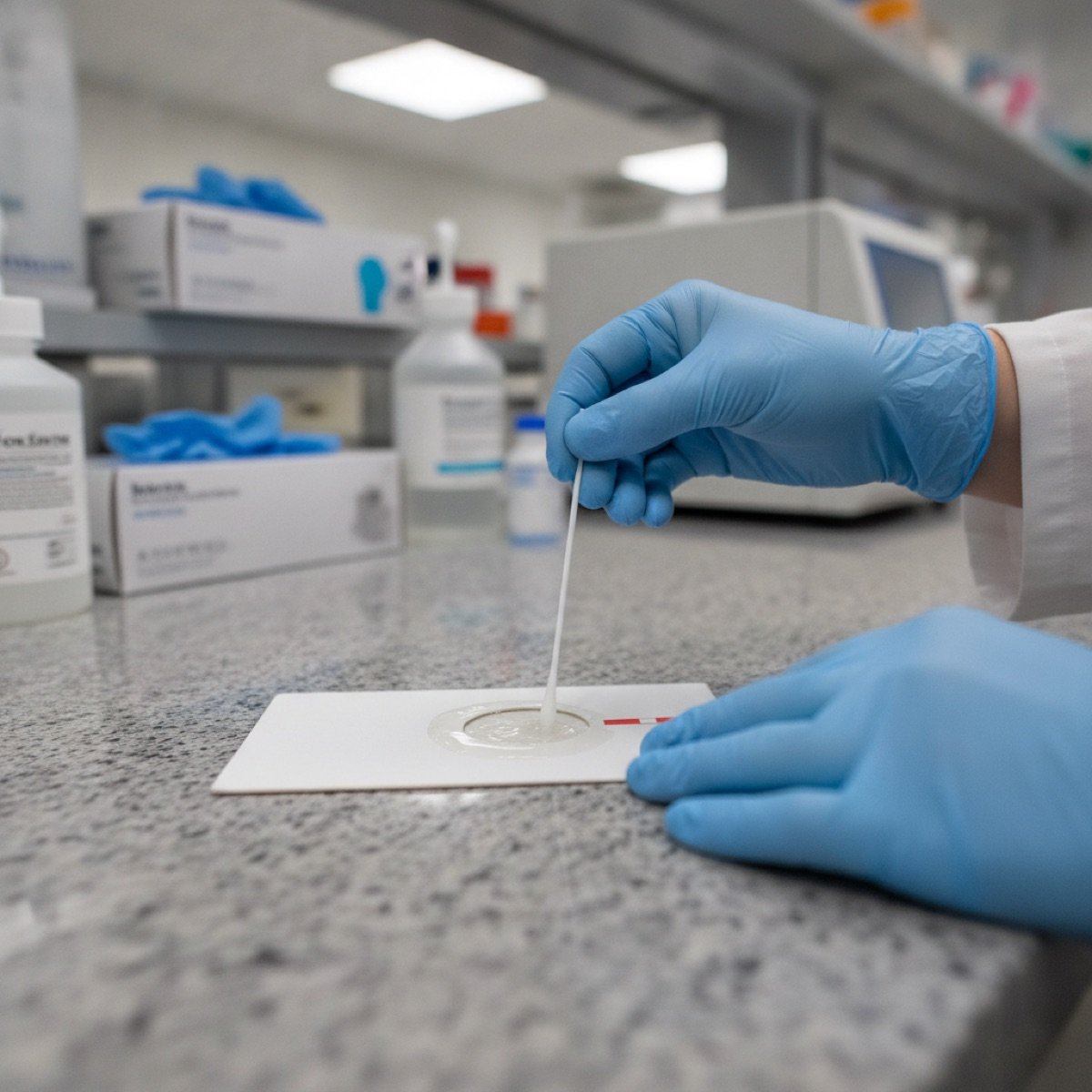
You cannot reliably diagnose strep throat by looking at the throat alone, because viral sore throats can look very similar. That is why testing is the standard of care. At our Westmont clinics, diagnosis usually involves a quick, painless swab of the back of the throat and tonsils.
Having on-site lab testing under one roof means most patients leave knowing whether they have strep and, when needed, with a treatment plan already in hand. There is no separate trip to a lab and no multi-day wait for a basic answer.
When a strep test is positive, the treatment is a course of antibiotics. Penicillin and amoxicillin are the first-choice antibiotics for group A strep; for people with a penicillin allergy, alternatives are available. It is important to take the full course exactly as prescribed, even after you start feeling better within a day or two, because stopping early can allow the infection to linger or return.
Antibiotics do several important things for strep throat:
Alongside antibiotics, supportive care helps you feel more comfortable: rest, plenty of fluids, warm or cold soothing foods, throat lozenges for older children and adults, and over-the-counter acetaminophen or ibuprofen for pain and fever when appropriate. Because strep throat is bacterial, home remedies alone will not cure it — the antibiotic is what clears the infection.
It can be tempting to ask for antibiotics for any bad sore throat, but that approach causes problems. Most sore throats are viral, and antibiotics do nothing for viruses. Taking antibiotics you do not need contributes to antibiotic resistance and can cause side effects like stomach upset or allergic reactions. Testing first ensures antibiotics go to the people who will actually benefit — those with a confirmed strep infection. This is exactly why our providers test rather than guess.
Consider a walk-in visit for evaluation and a rapid strep test if you or your child has:
Call 911 or go to the nearest emergency room if there is difficulty breathing, difficulty swallowing to the point of drooling or being unable to swallow saliva, a stiff neck that will not bend, muffled “hot potato” voice, severe swelling, or signs of a serious allergic reaction. These can signal a medical emergency that needs immediate care, not a walk-in visit.
Our clinics offer rapid strep testing on-site, and results are typically available within minutes of the swab. If a confirmatory throat culture is needed, that result generally takes a day or two.
Only if you test positive for strep or another bacterial infection. Most sore throats are viral and improve on their own with rest and fluids. Testing tells us which is which so antibiotics are used only when they will help.
Costs vary by your insurance plan and the services provided. National price ranges for urgent care visits and testing are published by consumer health resources, but we do not quote a single figure here because it depends on your coverage. For specifics, please see our cost and insurance page or call us at (630) 324-6825.
Yes. While strep is most common in children ages 5 to 15, adults — especially parents and people in close contact with school-age children — get it regularly and should be tested when symptoms suggest it.
If you suspect strep throat, you do not need an appointment. Walk in to either of our two Westmont locations for a rapid strep test and, when appropriate, same-day treatment. We are open Monday through Friday, 9 AM to 6 PM, and Saturday and Sunday, 9 AM to 5 PM. You can check in online to save time, or call us at (630) 324-6825 with questions. For a broader look at what we treat, visit our pediatric urgent care and general urgent care pages.
To learn more from trusted national sources, see the CDC’s overview of About Strep Throat and Mayo Clinic’s guide to strep throat symptoms and causes.
This page is for general educational purposes and is not a substitute for professional medical advice. If you are experiencing a medical emergency, call 911.
Monday – Friday: 9:00 AM – 6:00 PM
Saturday – Sunday: 9:00 AM – 5:00 PM

These settings are saved on this device only.