Sore throat: causes, relief and when to get checked
Most sore throats are caused by viruses and get better on their own within about a week. A sore throat that starts fast with fever and no cough may be strep, which needs a test. Urgent Care Center of Westmont in Westmont, IL can examine your throat and test for strep.
Viruses cause most sore throats, and the CDC says most get better on their own within one week.
Only about 1 in 10 adults and 3 in 10 children with a sore throat have strep throat.
A cough, runny nose, hoarse voice or pink eye points more toward a virus than strep.
A strep test is the only way to know for sure if a sore throat is strep.
Antibiotics do not help a sore throat caused by a virus.
What usually causes a sore throat?
A sore throat means the back of your throat is irritated or swollen. Doctors call this pharyngitis. The cause is usually simple, but a few causes need a test or treatment. Here are the common ones, listed from most to least common.
Common causes of a sore throat
Cause
How common
Clues
Cold or flu viruses
Most common by far
Runny nose, cough, hoarse voice. Flu often starts suddenly with fever and body aches.
Strep throat (group A strep bacteria)
About 1 in 10 adults and 3 in 10 children with a sore throat
Sudden throat pain, fever, swollen tonsils, no cough
Less often, sexually transmitted infections such as gonorrhea and chlamydia can cause a sore throat. MedlinePlus notes that sore throats are most common in colder months and spread easily among family members and close contacts.
Is it strep or a virus? How to tell the difference
Symptoms give useful clues. The CDC lists these signs for each. Use them to decide whether a strep test makes sense.
More likely strep
Sore throat that starts very quickly
Pain when swallowing
Fever
Red, swollen tonsils, sometimes with white patches or streaks of pus
Tiny red spots on the roof of the mouth
Swollen glands in the front of the neck
In children: headache, stomach pain, nausea, vomiting or a rash
More likely a virus
Cough
Runny or stuffy nose
Hoarse voice
Pink eye
Slow start along with other cold symptoms
Others at home have a cold
Clues are not proof. A sore throat that looks mild can still be strep, so only a strep test can confirm it.
A hoarse or lost voice often points to the voice box. See our laryngitis care page for that. For a deeper look at the two, read sore throat vs. strep.
Home care for a sore throat, and how long to wait
Read moreClose
These steps come from the CDC and MedlinePlus. They ease pain while a viral sore throat runs its course.
Drink plenty of fluids. Warm drinks, like tea with honey, or cold drinks and ice pops can both soothe.
Gargle with warm salt water a few times a day. Use about 1/2 teaspoon of salt in 1 cup of water.
Suck on ice chips, lozenges or hard candy. Do not give lozenges or hard candy to children under 4 because they can choke.
Run a clean cool-mist humidifier, especially when indoor air is dry in winter.
Take acetaminophen or ibuprofen as the label directs. Never give aspirin to children or teens.
Stay away from smoke and secondhand smoke.
How long to wait: most sore throats improve within one week. If you have cold symptoms and the pain is mild, a few days of home care is reasonable. Get checked sooner if you have the strep clues above, a high fever, a new rash, or pain that keeps getting worse.
When should you go to urgent care for a sore throat?
Read moreClose
Here is a simple rule. If you can swallow liquids and breathe normally, urgent care is the right place. Come in if any of these are true:
Sore throat with fever, and no cough or runny nose
Someone at home, school or work has strep
Pain is not better after several days, or it is getting worse
High fever, swollen neck glands or a new rash
Blood in your saliva or phlegm
Extreme tiredness with swollen neck glands, which can be a sign of mono
Sore throats that keep coming back
If any warning sign listed at the bottom of this page applies, call 911 or go to the nearest emergency room instead of urgent care.
What happens at your sore throat visit in Westmont, IL
Read moreClose
Urgent Care Center of Westmont, also known as Immediate Care Center of Westmont, treats sore throats at both of our Westmont, IL clinics, 7 days a week. Our team is led by board-certified physicians.
QuestionsYour clinician asks when the pain started, about fever, cough and runny nose, and who you have been around.
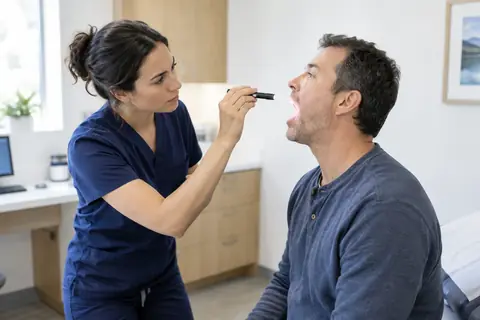
ExamWe look at your throat and tonsils, feel the glands in your neck, check your ears and take your temperature.
Tests that fit your symptomsIf strep is possible, we swab the back of the throat for a rapid strep test. A rapid test can miss some cases, so a throat culture may be sent to confirm. If mono is possible, your clinician may order blood work through mono screening. Flu and COVID-19 swabs are available when your symptoms point that way.
Your treatment planIf a test confirms strep, your clinician explains treatment, which may include a prescription medicine when appropriate. For a virus, antibiotics will not help, so the plan focuses on relief and what to watch for.
Return to school or workWe explain when it is safe to go back and how to protect the people around you.
Many insurance plans are accepted, and self-pay visits start from $125. See cost and insurance for details.
Sore throat in kids vs. adults
Read moreClose
Children
Strep is most common in children 5 through 15 years old and is rare under age 3, according to the CDC. A child with strep may complain of a headache or stomach ache more than a sore throat. Young children may refuse to eat or drink, so watch how much they drink and how often they pee.
Under 6 months: use only acetaminophen for pain or fever, dosed by weight.
6 months and older: acetaminophen or ibuprofen can be used.
Never give aspirin to children.
Do not give over-the-counter cough and cold medicines to children under 4 unless a clinician tells you to.
If your baby is younger than 3 months and has a fever, read our fever guide and call your pediatrician right away.
Adults
Only about 1 in 10 adults with a sore throat has strep, so most adult sore throats are viral. Smoking, dry air and allergies are common causes. If a sexually transmitted infection is possible, tell your clinician. That conversation stays private.
How to prevent sore throats and stop the spread
Read moreClose
Wash your hands often with soap and water.
Do not share cups, utensils or bites of food with someone who is sick.
Wash a sick person's cups, utensils and plates after they use them.
Cover coughs and sneezes.
Avoid close contact with people who have sore throats or colds.
Stay up to date on flu and COVID-19 vaccines, which protect against two common causes.
Do not smoke, and keep your home smoke-free.
Respiratory viruses spread most in fall and winter. The CDC says flu activity most often peaks between December and February, so that is when sore throats are most common in Westmont, IL households. Learn how long strep throat is contagious, or browse our other symptom guides.
How do I know if my sore throat is strep or viral?
You cannot know for sure without a test. Strep often starts suddenly with fever, painful swallowing, swollen tonsils and no cough. A cough, runny nose, hoarse voice or pink eye points more toward a virus. A rapid strep test, and sometimes a throat culture, confirms the cause so you get the right treatment.
How long does a sore throat last?
Most sore throats from viruses get better on their own within about one week, according to the CDC. If yours is not improving after several days, is getting worse, or comes with a high fever or rash, have it checked. Strep throat needs a test, because the right treatment helps prevent complications.
Can urgent care test for strep throat?
Yes. At Urgent Care Center of Westmont, a clinician examines your throat and can swab it for a rapid strep test. Because a rapid test can miss some cases, a throat culture may be sent to confirm. You can walk in or book online at either of our Westmont, IL clinics.
Do I need antibiotics for a sore throat?
Usually not. Antibiotics only help bacterial infections such as strep throat. They do not help sore throats caused by viruses, which are the most common kind. Taking antibiotics you do not need can still cause side effects. A strep test helps your clinician decide whether a prescription is appropriate.
Should I go to urgent care for a sore throat?
Go to urgent care if you have a sore throat with fever and no cough, if someone close to you has strep, or if pain lasts several days or gets worse. Urgent care is a good fit when you can swallow liquids and breathe normally. Trouble breathing or drooling needs emergency care.
Can allergies cause a sore throat?
Yes. The CDC lists allergies as a cause of sore throat. Allergies can cause postnasal drip, where mucus runs down the back of the throat and irritates it. Allergy sore throats usually come with sneezing, itchy eyes and clear mucus, and they do not cause a fever.
Is strep throat contagious?
Yes. Strep spreads through coughs, sneezes and shared cups or utensils, and sore throat germs pass easily among family members and close contacts. Wash hands often, do not share drinks, and ask your clinician when it is safe to return to school or work.
“I had to visit the clinic on a Saturday and they were super fast, clean, kind and got me in and out of there fast even with an almost full waiting room! Michael at the front desk was super helpful and went out of his way to make sure I was taken care of and comfortable until I could be seen by the doctor. Definitely 5 star care!!”
Kelly M. · July 2026 · Google★★★★★
“They was patient and efficient. The wait was not long either. I would definitely go back in the future.”
Cynithia C. · May 2026 · Google★★★★★
“The staff was incredibly welcoming, I felt super confident before getting three stitches and was in and out the building in 30 minutes tops. They are super professional!”