
Medically reviewed by the clinical team at Immediate Care Center of Westmont · Published July 23, 2026 · Last reviewed July 23, 2026
Athletes and parents sometimes worry about “failing” a sports physical. The good news is that a true failure is uncommon, and the word itself is a little misleading. At Immediate Care Center of Westmont, a walk-in urgent care serving Westmont and DuPage County, we perform sports physicals and want families to understand what actually happens when a clinician finds something. In most cases, a finding leads not to a permanent “no,” but to a “not yet” while an issue is checked or treated. Here is what can hold up clearance and what to expect next.
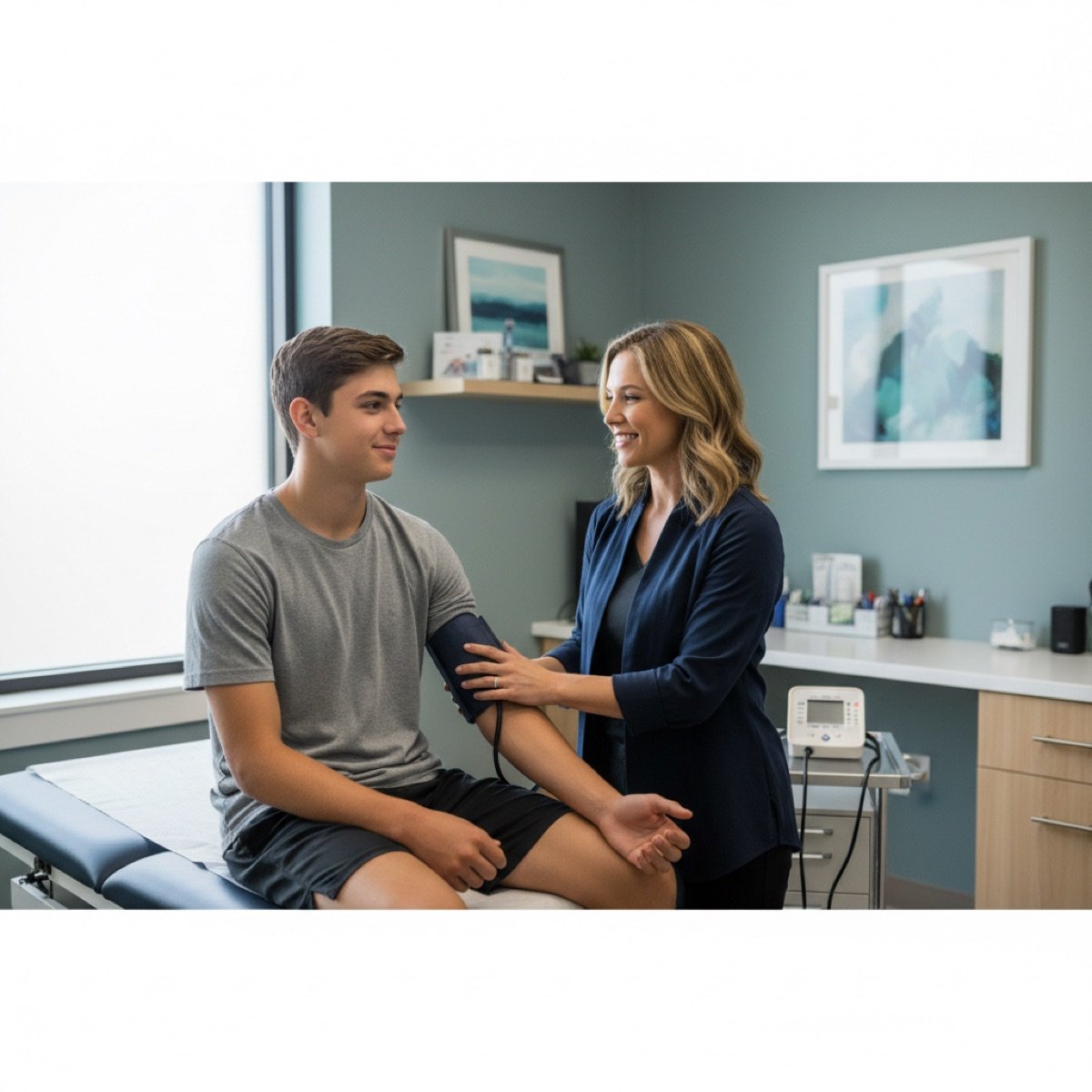
A sports physical, formally called a preparticipation physical evaluation (PPE), is designed to keep athletes safe. Rather than pass or fail, clinicians usually reach one of three outcomes: cleared for all sports, cleared with restrictions or conditions, or not cleared pending further evaluation. Being “not cleared” almost always means the provider wants more information before it is safe to play — not that sports are off the table forever. According to the American Academy of Family Physicians, the exam focuses on the cardiovascular and musculoskeletal systems, and those are the areas most likely to prompt a closer look; you can review their clinical overview of the preparticipation sports evaluation.
Cardiac concerns are taken the most seriously because, although rare, undetected heart conditions are among the leading causes of sudden death in young athletes. A clinician may pause clearance to investigate further if the history or exam reveals:
These findings do not mean an athlete cannot play. They mean a provider wants to rule out a serious problem first, sometimes with additional testing or a referral to a cardiologist.
Safety note: If an athlete faints during exercise, has chest pain, or cannot catch their breath, this is a medical emergency. Call 911 or go to the nearest emergency department right away — do not wait for a scheduled physical.
Blood pressure that reads high for the athlete’s age can delay clearance. Often a single high reading simply needs to be rechecked, since nervousness or a rushed arrival can raise it temporarily. Persistently elevated blood pressure may need follow-up before participation in certain high-intensity sports. Cleveland Clinic notes that sports physicals can uncover previously undetected conditions, which is part of their value; see their overview of the sports physical at Cleveland Clinic.
The musculoskeletal screen can reveal an injury that has not fully healed — a sprained ankle, an unstable knee, or a shoulder that still lacks strength. Playing on an incompletely healed injury risks making it worse. A provider may recommend rehabilitation, bracing, or a short delay until the injury recovers. This is a common and very treatable reason for a temporary hold, and it protects the athlete’s long-term ability to compete.
Chronic conditions rarely disqualify an athlete on their own, but they can delay clearance if they are not well managed. Examples include:
In most of these cases, the goal is to get the condition under good control so the athlete can participate safely. Ongoing care with a primary care provider is the best way to keep chronic conditions well managed year-round.

When a finding needs a closer look, our Westmont clinics can support the next steps on-site with laboratory testing and digital X-ray imaging when medically appropriate, which can help move the process along.
If you are not cleared right away, do not panic. Take these steps:
The great majority of athletes who are held at first are ultimately cleared once the concern is resolved. Getting the physical done early — well before the season — gives you the time to handle any of these steps without missing tryouts.
While some findings are out of your control, many delays are avoidable with a little preparation. Consider these steps before your visit:
None of these guarantee immediate clearance, but they reduce the odds of a preventable hold and make the whole process smoother for your athlete.
Sometimes an athlete is cleared, but with specific conditions attached — for example, wearing a brace, using an inhaler before activity, following a concussion return-to-play protocol, or avoiding one particular sport while cleared for others. These conditional clearances are a normal and sensible middle ground. They let athletes keep participating while managing a real risk responsibly, and they reflect the individualized nature of the preparticipation evaluation.
Not usually. Many murmurs are harmless. A provider may simply want to confirm it is benign before clearing your child, sometimes with additional evaluation.
Yes. Being “not cleared” is typically a hold, not a permanent decision. Once the issue is checked or treated, you can return for re-evaluation.
Unhealed injuries and blood pressure that needs rechecking are among the most common reasons a provider pauses clearance. Both are usually resolved quickly.
No. The history questions exist to keep athletes safe. Withholding information about symptoms like chest pain or fainting can put your child at serious risk. Always answer honestly.
The best way to avoid a last-minute surprise is to get the physical done early. Immediate Care Center of Westmont is open Monday through Friday, 9 AM to 6 PM, and Saturday and Sunday, 9 AM to 5 PM, with two locations serving Westmont and DuPage County. Walk in when it suits you, check in online to save time, or call (630) 324-6825 with questions. If a finding needs prompt attention, our urgent care team is here to help.
This page is for general educational purposes and is not a substitute for professional medical advice. If you are experiencing a medical emergency, call 911.
Monday – Friday: 9:00 AM – 6:00 PM
Saturday – Sunday: 9:00 AM – 5:00 PM

These settings are saved on this device only.