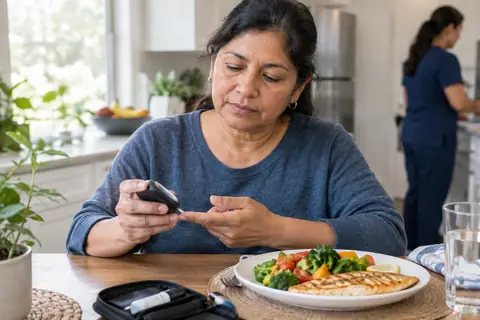
Urgent Care Center of Westmont offers blood glucose and A1C testing at our Westmont, IL clinic, plus guidance on what your numbers mean and support for managing diabetes with your care team.
Prediabetes and type 2 diabetes often cause no symptoms, so a blood test is the only way to know. Urgent Care Center of Westmont, also known as Immediate Care Center of Westmont, offers on-site blood glucose testing and hemoglobin A1C testing. Our team is led by board-certified physicians.
If you have risk factors, symptoms such as increased thirst or frequent urination, or you need to check how your diabetes plan is working, walk in or check in online at our Westmont, IL clinic.
Key facts
For most people with diabetes, the A1C goal is below 7%, though your own target may differ (NIDDK).
Many people with diabetes aim for blood sugar of 80 to 130 mg/dL before meals and under 180 mg/dL about 2 hours after a meal starts (NIDDK).
Blood sugar below 70 mg/dL is considered low (CDC).
Blood pressure, cholesterol and not smoking matter alongside blood sugar for preventing complications.
What Diabetes Testing Measures
The CDC lists several blood tests used to screen for and diagnose diabetes:
A1C test: shows your average blood sugar over the past 2–3 months. Below 5.7% is normal, 5.7%–6.4% suggests prediabetes and 6.5% or higher suggests diabetes. No fasting is needed.
Fasting blood sugar: taken after an overnight fast. 99 mg/dL or below is normal, 100–125 mg/dL suggests prediabetes and 126 mg/dL or higher suggests diabetes.
Random blood sugar: no fasting needed. 200 mg/dL or higher suggests diabetes.
A clinician confirms any diagnosis, sometimes with a repeat test. MedlinePlus notes that anemia, some blood disorders, and kidney or liver disease can make A1C results less accurate, so tell us about your health history.
Common Symptoms of Diabetes
According to the CDC, symptoms can include:
Urinating often and feeling very thirsty or hungry
Weight loss you cannot explain
Feeling very tired, or blurry vision
Cuts or sores that heal slowly, or frequent infections
Numbness or tingling in the hands or feet
Type 1 diabetes can develop over just weeks or months. Type 2 often develops slowly over years.
How We Help at Our Westmont, IL Clinic
Read moreClose
At your visit, a clinician reviews your symptoms, risk factors and medicines, then orders the right tests. We explain your results in plain language and talk through next steps. That may include lifestyle changes, a treatment plan, follow-up testing or a referral.
People with diabetes often need an A1C at least twice a year, per MedlinePlus. If you do not have a regular doctor, our primary care services can help with ongoing care, and our full lab test panel can check other health markers at the same time.
When Diabetes Is an Emergency
Read moreClose
Diabetic ketoacidosis (DKA) and very low blood sugar can be life-threatening. Per the CDC, call 911 or go to the nearest emergency room if you have:
Fruity-smelling breath, or fast, deep breathing
Vomiting and you cannot keep food or fluids down
Blood sugar that stays at 300 mg/dL or above
Confusion, fainting, trouble breathing or chest pain
We accept most major insurance plans, including Blue Cross Blue Shield, Cigna, Humana, UnitedHealthcare, Medicare, Meridian and CountyCare. Call (630) 324-6825 to confirm your coverage, or visit our insurance and cost page. Paying on your own? Our self-pay pricing is flat and upfront, with general visits from $125. Lab tests may be priced separately, so ask before your visit.
The ABCs of diabetes care
Read moreClose
Diabetes ABCs (NIDDK)
Letter
What it means
Common goal
A
A1C, your average blood sugar over about 3 months
Below 7% for most people
B
Blood pressure
Below 130/80 mm Hg for some people
C
Cholesterol
Set with your care team; some people need a statin
S
Stop smoking
Quit smoking, vaping and other tobacco
NIDDK notes that older adults, people with other health conditions and people who often have low blood sugar may need different targets. Confirm your goals with your care team.
Daily blood sugar targets
Read moreClose
For many people with diabetes, NIDDK lists these ranges:
Before meals: 80 to 130 mg/dL
About 2 hours after a meal starts: less than 180 mg/dL
With a continuous glucose monitor: time in range of 70 to 180 mg/dL, ideally at least 70% of the time
Bring your meter, app or monitor readings to your visit. Patterns, such as highs after breakfast or lows overnight, tell your clinician more than a single number.
Low blood sugar: know the signs and the 15-15 rule
Read moreClose
CDC lists common signs of low blood sugar as a fast heartbeat, shaking, sweating, nervousness, irritability or confusion, dizziness and hunger. Some people, especially those who have had diabetes for many years, feel few warning signs.
If your meter reads below 70 mg/dL, CDC describes the 15-15 rule:
Take 15 grams of fast-acting carbs, such as 4 ounces of juice or regular soda, 1 tablespoon of sugar or honey, or glucose tablets as the package directs.
Wait 15 minutes and check again.
If you are still below 70 mg/dL, repeat.
Once you are back in range, eat a snack or meal with protein and carbs.
Young children may need less than 15 grams, so ask your child's doctor. Ask your doctor whether you should keep a prescription glucagon kit.
What happens at a diabetes check visit
Read moreClose
ReviewYour clinician goes over your readings, medicines, meals and any recent highs or lows.
CheckBlood pressure, weight and a look at your feet, which can develop problems you may not feel.
TestAn A1C or other labs as needed. Our full lab test panel can check cholesterol and kidney markers at the same visit.
PlanWe explain your results and help you plan follow-up with your doctor or our primary care team. NIDDK also recommends regular eye and dental checks.
Diabetes care is a long game. Urgent Care Center of Westmont, also known as Immediate Care Center of Westmont, can be one steady point of contact in Westmont, IL for check-ins between visits with your regular doctor or specialist. Our team is led by board-certified physicians, and our primary care services cover follow-up for ongoing conditions.
Here is how a long-term plan often looks, based on guidance from the American Diabetes Association (ADA), the CDC and NIDDK. Your own schedule may differ, so confirm it with your clinician.
Common diabetes check schedule (ADA, CDC, NIDDK)
Check
How often it is often done
A1C
At least twice a year if you are meeting your goals; about every 3 months if your plan changed or you are not at goal
Blood pressure
At every visit
Kidney tests (blood and urine)
At least once a year
Cholesterol
At least once a year, or as your clinician advises
Foot check
A quick look at every visit; a full exam at least once a year
Dilated eye exam
Every 1 to 2 years, or as your eye doctor advises
Dental exam
At least once a year
We can help with the lab side of this schedule. Our lab testing service collects samples on site at both clinics, and the full lab test panel can check kidney and cholesterol markers. Tell the clinician what you are due for and we will work from there.
Kidneys, feet and eyes
High blood sugar can slowly damage small blood vessels and nerves. NIDDK and MedlinePlus point to the kidneys, feet and eyes as places where problems can start quietly. That is why yearly kidney tests, regular foot checks and dilated eye exams matter even when you feel fine. Read more in the MedlinePlus pages on diabetic kidney problems and diabetic eye problems.
Coordinating with specialists
Many people with diabetes see an eye doctor, a foot specialist, a kidney specialist or an endocrinologist at some point. If your clinician thinks you need one, we can talk through the referral and keep your results ready to share. Bring your latest A1C and a list of medicines to every appointment. If you prefer a first conversation by phone or video, ask about telehealth.
Living well with type 2 diabetes
Read moreClose
Daily habits shape your numbers as much as any test. NIDDK describes four areas that help most people with type 2 diabetes:
Eating. Build meals around vegetables, whole grains, lean protein and healthy fats. Pay attention to portions and to sugary drinks, which raise blood sugar quickly. NIDDK offers practical tips on eating, diet and activity.
Moving. The CDC suggests adults aim for at least 150 minutes of moderate activity each week, as health allows. Walking after meals is an easy place to start.
Medicines. Take them as directed and tell your clinician about side effects instead of stopping on your own.
Checking. Test your blood sugar as your care team advises and write down patterns, such as highs after dinner.
Sleep and stress matter too. Poor sleep and long periods of stress can push blood sugar up. Small steps, such as a regular bedtime or a short walk, add up over months.
Sick days
Illness can make blood sugar harder to control. If you have the flu or a stomach bug, keep drinking fluids, keep taking your diabetes medicine unless your clinician says otherwise, and check your blood sugar more often. Call your care team if you cannot keep fluids down. Our pages on flu testing and food poisoning care explain how we can help when you are sick.
Ask your clinician before you change your diet, stop a medicine or start a new exercise plan. If weight is part of your goals, our medical weight loss program can work alongside your diabetes care.
Prediabetes: catch it early
Read moreClose
Prediabetes means your blood sugar is higher than normal but not yet high enough for a diabetes diagnosis. The CDC says many people with prediabetes do not know they have it, and it can develop into type 2 diabetes over time. The good news is that this stage is a chance to act.
You may want to ask about testing if you:
Are overweight
Have a parent, brother or sister with type 2 diabetes
Are age 35 or older (the CDC recommends screening for adults at this age)
Rarely get physical activity
Have had diabetes during pregnancy
Have high blood pressure or high cholesterol
A simple A1C or blood sugar test gives you an answer. Our diabetes testing page explains the tests and what the numbers mean.
What helps
NIDDK and the CDC describe lifestyle changes as the main tool for prediabetes. A structured lifestyle program, with healthy eating, more activity and modest weight change for people who need it, has been shown in research to lower the chance of developing type 2 diabetes. See the CDC overview of preventing type 2 diabetes and the NIDDK page on preventing type 2 diabetes.
If weight is part of the picture, our physician-supervised medical weight loss program can help you build a personal plan with follow-up visits. We do not promise results, but we can help you take a first step. Walk in or check in online, and ask about retesting every year or as your clinician advises.
Cost and insurance for ongoing care
Read moreClose
Coverage for diabetes visits and lab work varies by plan. See the list on our insurance page and call (630) 324-6825 to confirm yours. Self-pay visits start from $125.
Not for an A1C or random blood sugar test. A fasting blood sugar test needs an overnight fast. Call us if you are unsure which test you need.
Who should get tested?
The CDC advises talking with a clinician about testing if you have risk factors, because early type 2 diabetes often has no symptoms.
Can you manage my diabetes long term?
We can test, explain results and help with a plan. For regular follow-up, ask about our primary care options.
Where are you located?
Our main clinic is at 29 N Cass Ave, Ste A, Westmont, IL 60559. We also have a second location inside Jewel-Osco at 4 E Ogden Ave. Both are open Mon–Fri 9 AM–6 PM and Sat–Sun 9 AM–5 PM.
What is a normal blood sugar after eating?
For many people with diabetes, NIDDK suggests a target under 180 mg/dL about 2 hours after a meal starts. People without diabetes usually stay lower. Your own target may differ based on your age, other conditions and how often you have lows, so ask your care team.
What A1C should I aim for?
NIDDK says the goal for most people with diabetes is an A1C below 7%. Some people, such as older adults with long-standing diabetes or those who often have low blood sugar, may have a different goal. Your clinician can help you set a target that is safe for you.
Can urgent care check my A1C?
Yes. Urgent Care Center of Westmont offers A1C and blood glucose testing in Westmont, IL. A clinician explains how your result compares with your goal and helps you plan follow-up with your primary care doctor or our primary care team.
What should I do if my blood sugar is low?
If it is below 70 mg/dL, CDC advises the 15-15 rule: take 15 grams of fast-acting carbs, such as half a cup of juice, wait 15 minutes and check again. Repeat if you are still low, then eat a snack with protein once you are back in range.
How often should I get an A1C test?
The ADA and CDC suggest an A1C at least twice a year if you are meeting your goals, and about every 3 months if your treatment changed or you are not at goal. Your clinician sets the schedule that fits you. Our Westmont, IL clinic offers A1C testing.
What is prediabetes, and can it be reversed?
Prediabetes means blood sugar is above normal but below the diabetes range. The CDC says lifestyle changes can lower the chance of developing type 2 diabetes. Results vary from person to person, so ask your clinician about retesting and a plan that fits your health.
Do people with diabetes need eye and foot exams?
Yes. NIDDK and the ADA advise a dilated eye exam every 1 to 2 years and a full foot exam at least once a year, with quick foot checks at visits. Diabetes can damage nerves and vessels quietly, so these checks matter even if you feel fine.
Can I get diabetes care and weight support in one place?
Often yes. Weight, blood sugar and blood pressure are linked, so our team can look at them together. We offer diabetes management and a physician-supervised medical weight loss program in Westmont, IL. Results are never promised, and your clinician tailors the plan.
“The staff was incredibly welcoming, I felt super confident before getting three stitches and was in and out the building in 30 minutes tops. They are super professional!”
Jack · March 2026 · Google★★★★★
“It was a great visit Yesenia was so nice and made me feel Comfortable after waiting a hour she seen I was still there and called me in right away What a Beautiful Soul”
Fay-Faith F. · January 2026 · Google★★★★★
“This is probably the best urgent care I have ever been too. The staff os knowledgeable and caring. 10 out of 10. Thanks yall!”