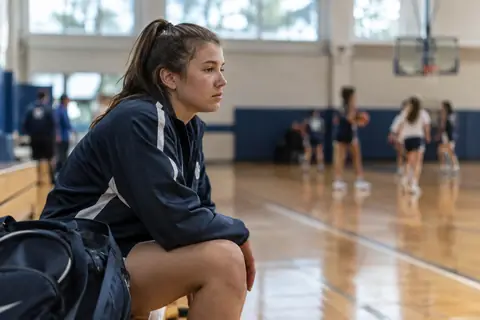
Mono screening at Urgent Care Center of Westmont in Westmont, IL. Walk in if you have a sore throat, fever, swollen glands and deep tiredness. Our providers examine you and order blood tests when they will help.
Infectious mononucleosis (mono) is an illness most often caused by the Epstein-Barr virus. It usually brings extreme tiredness, fever, sore throat, body aches and swollen lymph nodes in the neck. At Urgent Care Center of Westmont, also known as Immediate Care Center of Westmont, our providers can examine you, check for other causes such as strep throat, and order blood tests like the Monospot test when they are useful.
Most people get better in 2 to 4 weeks with rest and fluids. Some feel tired for several weeks longer. There is no vaccine for mono, and it spreads mainly through saliva, so avoid sharing drinks, utensils and kisses while you are sick.
Key facts
Mono is most common in teens and young adults, especially college students, according to MedlinePlus.
Symptoms usually start 4 to 6 weeks after infection, so most people never know where they caught it.
People can spread the virus for weeks, including before they feel sick, per the CDC.
There is no vaccine for mono; avoid sharing drinks, utensils and lip balm, and skip kissing while sick.
What mono is and common symptoms
According to the CDC, typical mono symptoms include:
Extreme fatigue
Fever
Sore throat, often with swollen tonsils
Headache and body aches
Swollen lymph nodes in the neck or armpits
Sometimes a rash or a swollen spleen or liver
Mono symptoms can look like strep throat or the flu, which is why an exam helps.
How we check for mono at our Westmont, IL clinic
A visit starts with your history and an exam of your throat, neck glands and belly. A strep test may be done because strep throat can look like mono and needs different care. If mono is likely, a provider may order blood work such as a Monospot test or a white blood cell count.
Timing matters. MedlinePlus notes that the Monospot test can be negative if it is done in the first 1 to 2 weeks of illness, so a repeat test is sometimes needed. Care for mono focuses on rest, fluids, salt-water gargles and over-the-counter pain or fever medicine. The CDC advises against penicillin antibiotics such as amoxicillin for people with mono.
Because the spleen can swell, the CDC advises avoiding contact sports until you fully recover. Ask your provider when it is safe to return to sports.
Walk in or check in online to save your spot. Both locations are open Monday to Friday, 9 AM to 6 PM, and Saturday and Sunday, 9 AM to 5 PM: our main clinic at 29 N Cass Ave, Ste A, Westmont, IL 60559, and Immediate Care Center of Westmont Inside Jewel-Osco at 4 E Ogden Ave, Westmont, IL 60559.
We accept most major insurance plans, including Blue Cross Blue Shield, Cigna, Humana, UnitedHealthcare and Medicare. Coverage for mono testing depends on your plan, so please call (630) 324-6825 to confirm before your visit. See the full list on our cost and insurance page.
No insurance? We offer flat, upfront self-pay urgent care pricing. Ask our front desk what your visit and any tests will cost before we start.
Mono vs. strep throat vs. the flu
Read moreClose
Common patterns; an exam and tests sort out which one you have
Based on MedlinePlus and the CDC; everyone recovers at a different pace
Time
What to expect
What helps
Weeks 1 to 2
Fever, sore throat and swollen glands
Rest, fluids, salt-water gargles, pain and fever relief
Weeks 2 to 4
Most people start to feel better
Return to school or work gradually as energy allows
After 4 weeks
Some people stay tired for weeks longer
Pace yourself; wait for clearance before contact sports
Home care that helps
Read moreClose
Rest as much as your body asks for, and expect some low-energy days even after the fever is gone.
Drink plenty of fluids. Cold drinks and soft foods are easier on a sore throat.
Gargle with warm salt water to ease throat pain.
Use over-the-counter pain and fever medicine as directed. MedlinePlus advises against giving aspirin to children or teens because of the risk of Reye syndrome.
Skip contact sports, heavy lifting and intense workouts until a clinician says it is safe. MedlinePlus notes this is about a month for most people.
For students and athletes
Read moreClose
Because mono hits teens and college students hardest, it often lands during exams or a sports season. Ask for a school or work note at your visit if you need one. Athletes should check with a clinician before returning to practice, and a sports physical visit is a good time to talk about clearance.
Roommates and teammates can lower their risk by not sharing water bottles, vape devices, utensils or lip products. Walk in or check in online at our Westmont, IL clinic if you have a sore throat, fever and unusual tiredness.
Yes. The Monospot test may be negative early in the illness, most often in the first 1 to 2 weeks. A provider may repeat it or order other blood tests.
Do antibiotics treat mono?
No. Mono is caused by a virus. Antibiotics help only if a bacterial infection, such as strep throat, is also present.
When can I play sports again?
The CDC advises avoiding contact sports until you fully recover because the spleen may be enlarged. Ask your provider before you return.
Is mono contagious?
Yes. It spreads mainly through saliva. Do not share cups, utensils or lip products, and wash your hands often.
How long is mono contagious?
People can spread the virus for weeks, including before symptoms start, according to the CDC. The virus then stays in the body in an inactive form and can become active again later, sometimes without symptoms. Avoid sharing drinks, utensils, lip balm and kisses while you are sick.
Can you get mono twice?
Most people get mono only once. The Epstein-Barr virus that usually causes it stays in the body for life and can reactivate, but the CDC notes that reactivation does not always cause symptoms. If mono-like symptoms come back, an exam can look for other causes.
How did I get mono if I didn't kiss anyone?
Mono spreads mainly through saliva, so sharing drinks, utensils or lip balm can pass it on. Symptoms start 4 to 6 weeks after infection, so the exposure often happened long before you felt sick. Many people catch the virus in childhood without getting sick at all.
When can I go back to school or work with mono?
There is no single rule. Many people return once the fever is gone and they have enough energy, often easing back in. Keep up good hygiene, avoid sharing cups and utensils, and wait for a clinician's clearance before contact sports.
“Literally the best. Seriously worth going to. Friendliest people at all parts and helpful”
Cristian G. · April 2026 · Google★★★★★
“Very impressed. From the receptionist to everyone I came in contact with was very friendly and knowledgeable I highly recommend this place for urgent care”
Jennyfrom C. · March 2026 · Google★★★★★
“All staff was friendly. my care was priority and barely any wait time throughout my process.”