Chest congestion: causes, relief and when to get checked
Chest congestion is a heavy, full feeling in the chest, usually from mucus after a cold, flu or chest cold. Fluids, steam and rest help most people feel better. If it lasts, gets worse or comes with fever and chills, Urgent Care Center of Westmont in Westmont, IL can check your lungs.
Chest congestion is a feeling of fullness or heaviness in the chest, usually from extra or thicker mucus.
Most chest congestion comes from viral infections such as colds, flu, COVID-19 and RSV.
Drinking enough fluids thins mucus, while dehydration can make it thicker.
Chest cold symptoms usually last less than 3 weeks.
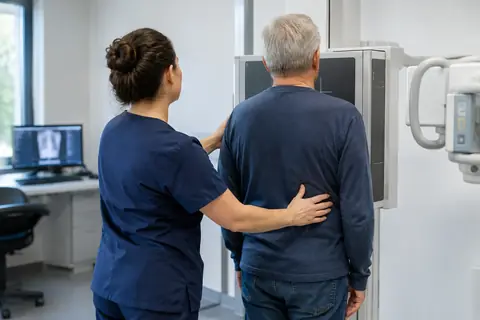
A chest X-ray can help tell pneumonia from a chest cold, and our X-ray is at the 29 N Cass Ave clinic only.
What causes chest congestion?
Cleveland Clinic describes chest congestion as fullness or heaviness in the chest from too much mucus, mucus that is thicker than usual, or both. It often comes with a wet cough that brings up mucus, or a dry cough that does not. Here are the usual causes, roughly from most to least common.
Common causes of chest congestion
Cause
How common
Clues
Viral infections: cold, flu, COVID-19, RSV
Most common
Runny nose, sore throat, aches, sometimes fever
Chest cold (acute bronchitis)
Common, often after a cold
Cough with or without mucus, chest tightness, mild aches
Bronchiolitis
Common in babies and young children
Cold symptoms, then wheezing
Allergies and asthma
Common
Wheezing, tight chest, itchy eyes or sneezing
Pneumonia
Less common, more serious
Fever, chills, shortness of breath, chest pain when breathing
Long-term causes
Less common
COPD, smoking or vaping, acid reflux irritation, or fluid in the lungs from heart problems
Chest cold or pneumonia? How to tell the difference
Both start with a cough and congestion. A chest cold is usually caused by a virus and gets better on its own. Pneumonia is an infection deeper in the lungs. The CDC and MedlinePlus describe these patterns.
More like a chest cold
Cough, with or without mucus
Mild body aches and tiredness
Low fever or no fever
Stuffy nose and sore throat
Slowly getting better day by day
Pneumonia is possible
Fever, mild or high, with shaking chills
Shortness of breath
Chest pain that is worse when you breathe or cough
Rust-colored or discolored mucus
Feeling much sicker, or getting better and then worse
Other clues help too. Wheezing points to asthma or bronchitis. Sneezing and itchy eyes point to allergies. Heartburn points to acid reflux. Compare common viruses in flu vs. cold vs. COVID vs. RSV.
How to loosen chest congestion at home
Read moreClose
These steps come from Cleveland Clinic, the CDC and MedlinePlus. They help thin mucus so you can cough it up.
Drink plenty of fluidsWater, warm tea and broth thin mucus. Dehydration makes it thicker and harder to clear.
Add moistureUse a clean humidifier or cool-mist vaporizer, or breathe steam from a warm shower.
Soothe the coughHoney in hot tea or water can help anyone 1 year or older. Gargling with salt water can ease a scratchy throat.
Rest and breathe deeplyRest helps you recover. MedlinePlus also suggests taking slow, deep breaths to help clear your lungs.
Use medicine carefullyOver-the-counter cough medicines can help some adults. Check with a clinician before giving any to children, since many are not recommended under age 6.
Avoid smokeSmoke and vaping irritate the airways and slow healing.
How long to wait: if you are slowly getting better, give it time. Chest cold symptoms usually last less than 3 weeks. If congestion is not improving after a few days, or it is getting worse, get checked.
When should you go to urgent care for chest congestion?
Read moreClose
Urgent care is the right place when you are breathing comfortably at rest but your congestion is lasting, worsening or paired with fever. Come in if:
Congestion is not better after a few days, or it is getting worse
A fever lasts more than 5 days, or reaches 104°F (40°C)
You have fever and shaking chills with your cough
You feel short of breath with activity, or you have new wheezing
You cough up rust-colored mucus
You get better and then get worse again
Symptoms last more than 3 weeks, or you keep getting bronchitis
You have heart or lung disease, diabetes or a weak immune system and develop a new cough with fever
If any warning sign listed at the bottom of this page applies, call 911 or go to the nearest emergency room instead of urgent care.
Walk in or book a visit online. If you think you need an X-ray, please choose our 29 N Cass Ave clinic.
What happens at your visit, including chest X-ray
Read moreClose
Urgent Care Center of Westmont, also known as Immediate Care Center of Westmont, is open 7 days at two Westmont, IL clinics. Our team is led by board-certified physicians.
QuestionsWhen it started, fever, mucus, wheezing, smoking or vaping, and any heart or lung conditions.
Lung examYour clinician listens to your chest with a stethoscope for crackles or wheezing and checks how you are breathing.
Swabs when they fitNose swabs can test for flu, COVID-19 and RSV.
Chest X-ray if neededMedlinePlus says a chest X-ray is likely if pneumonia is suspected. On-site X-ray is available at our 29 N Cass Ave clinic only. Our Jewel-Osco location does not have X-ray.
Treatment planFor a chest cold or bronchitis, the plan focuses on relief, and an inhaled medicine may help with wheezing. For pneumonia, many people recover at home with prescription medicine when appropriate. If you need hospital care, your clinician will tell you.
Many insurance plans are accepted, and self-pay visits start from $125.
Chest congestion in babies, kids and older adults
Read moreClose
Babies and young children
Babies cannot cough up mucus well. The American Academy of Pediatrics suggests saline drops and gentle nose suction before feeding, a humidifier and plenty of fluids. Never give honey to a baby under 1. Do not use over-the-counter cough and cold medicine under age 4. A mentholated chest rub can be used from age 2. RSV and bronchiolitis can be serious in infants, so read RSV symptoms and when to test.
Older adults
Adults 65 and older, and people with heart disease, lung disease or diabetes, are more likely to get very sick from pneumonia. MedlinePlus notes that hospital care is more likely at 65 and older. If you are in this group, get a cough with fever and congestion checked early rather than waiting it out.
How to prevent chest congestion
Read moreClose
Get a yearly flu vaccine and stay current on COVID-19 vaccines.
Ask about pneumonia and RSV vaccines if you are an older adult or have a long-term condition.
Wash or sanitize your hands often and cover coughs and sneezes.
Do not smoke or vape, and avoid secondhand smoke.
Improve indoor air with fresh air or an air purifier, and keep humidifiers clean.
Respiratory viruses spread most in fall and winter, and the CDC says flu activity most often peaks between December and February. See more symptom guides, or our cough guide for a cough without much congestion.
There is no instant fix, but you can help mucus clear. Drink plenty of fluids, use a clean humidifier or warm shower steam, rest, and try honey in warm water if you are 1 or older. Avoid smoke. If congestion is not improving after a few days, or you have fever and chills, get checked.
How long does chest congestion last?
Congestion from a cold or chest cold usually improves within days, and chest cold symptoms usually last less than 3 weeks. A cough can linger a bit longer while your airways heal. Congestion that is getting worse, lasting past 3 weeks, or coming with a lasting fever should be checked.
Is chest congestion a sign of pneumonia?
Usually not. Most chest congestion comes from colds and chest colds. Pneumonia is more likely when congestion comes with fever, shaking chills, shortness of breath or chest pain when you breathe. A clinician can listen to your lungs and, when needed, order a chest X-ray to check.
Can urgent care do a chest X-ray?
Yes. Urgent Care Center of Westmont has on-site X-ray at our main clinic, 29 N Cass Ave, Ste A, Westmont, IL. Our location inside Jewel-Osco does not have X-ray. Your clinician examines you first and orders an X-ray only when it will help with your diagnosis.
Does chest congestion need antibiotics?
Usually not. Most chest congestion is caused by viruses, and the CDC says antibiotics will not help a chest cold. Antibiotics may be appropriate for bacterial pneumonia. Your clinician decides after examining you, and sometimes after a chest X-ray, rather than based on mucus color alone.
When is chest congestion serious?
Get checked soon if congestion comes with fever and chills, shortness of breath with activity, rust-colored mucus, or symptoms that improve and then get worse. Chest pain or pressure, coughing up blood, struggling to breathe or blue lips or fingertips need emergency care right away.