
Medically reviewed by the clinical team at Immediate Care Center of Westmont · Published July 23, 2026 · Last reviewed July 23, 2026
If your child’s coach or school has requested a sports physical, you may be wondering exactly what happens during the visit. At Immediate Care Center of Westmont, a walk-in urgent care serving Westmont and the surrounding DuPage County communities, we complete school and sports physicals throughout the year — and especially during the busy back-to-school season. This guide walks through what a school sports physical consists of, step by step, so you and your young athlete know what to expect.

A sports physical — known in medical settings as a preparticipation physical evaluation, or PPE — is designed to confirm that it is safe for someone to take part in an organized sport. It is not the same as a full annual checkup, but it borrows many of the same tools. According to the American Academy of Family Physicians, the evaluation focuses heavily on the cardiovascular and musculoskeletal systems, because those are where the most important, sport-relevant problems tend to show up. You can review the AAFP’s clinical overview of the preparticipation sports evaluation.
Most experts agree that the health history is the most important part of a sports physical. Research consistently shows that the majority of significant findings come from the questionnaire rather than the hands-on exam. Before or during the visit, you and your child will typically be asked about:
Answering these questions honestly and completely is the best thing a family can do to keep an athlete safe. It helps the provider decide whether the exam can be signed off routinely or whether something deserves a closer look first.
Once the history is reviewed, the clinician performs a focused hands-on exam. A typical sports physical includes the following components.
The provider records height, weight, blood pressure, and pulse. Blood pressure that is high for the child’s age may need a repeat check or follow-up before clearance.
A basic eye-chart screening checks whether vision is adequate, with or without glasses or contacts.
Using a stethoscope, the clinician listens for heart murmurs, irregular rhythms, and clear breathing. This part of the exam, combined with the history, is how a provider screens for the rare but serious heart conditions that can affect young athletes.
The provider gently presses on the abdomen to check for tenderness, unusual masses, or an enlarged liver or spleen.
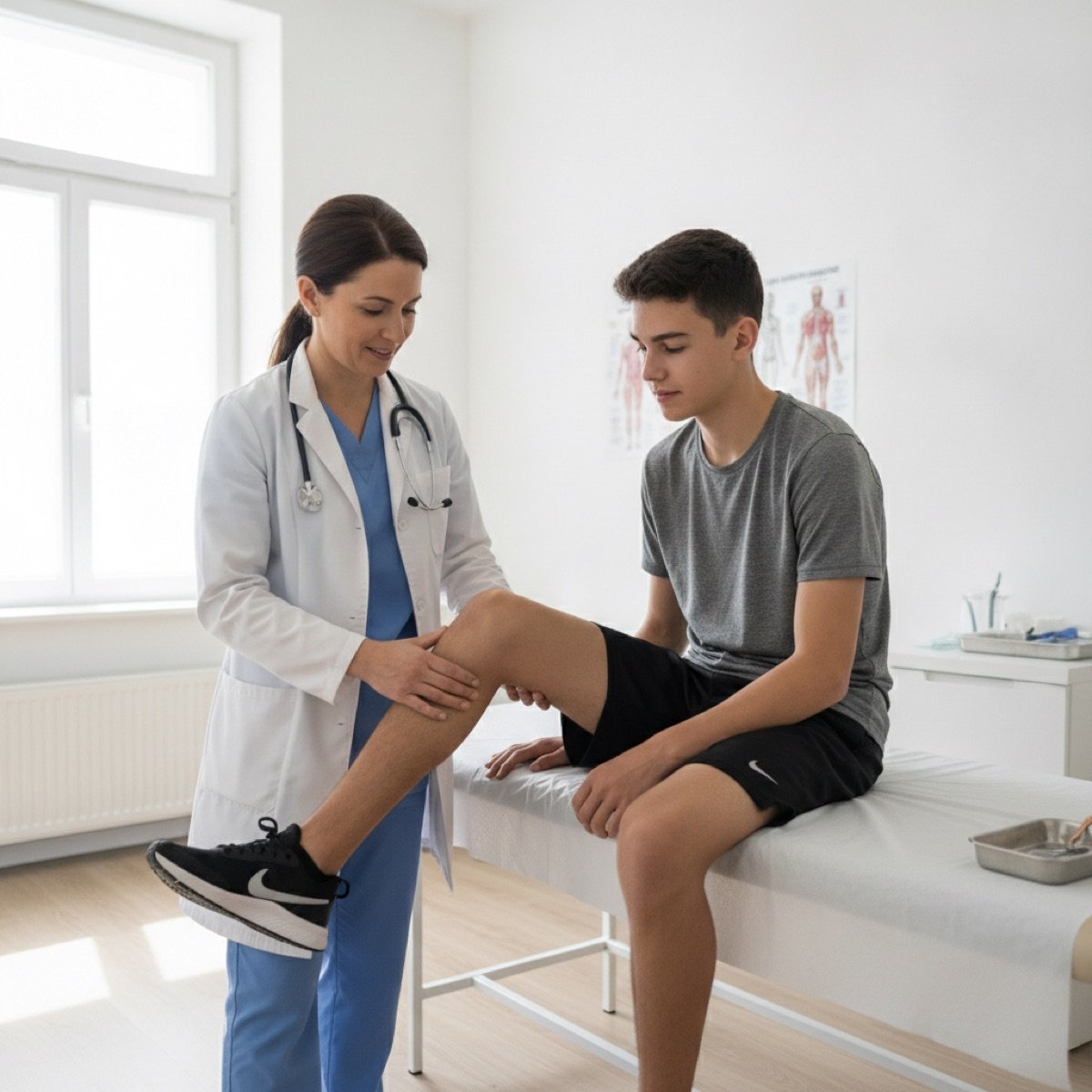
Often called the “duck walk” or joint-by-joint screen, this assesses the neck, shoulders, elbows, wrists, hips, knees, and ankles for range of motion, strength, stability, and any lingering effects of old injuries. Because sports injuries are so common, this screen helps identify areas that may need strengthening, bracing, or rehabilitation before play begins.
The clinician may also look at posture, general development, and the skin for conditions such as contagious rashes that could matter in contact sports.
For the vast majority of healthy teens, this is where the visit ends — with a signed form and clearance to play. If the provider identifies something that needs more information, our Westmont clinics can support the next step on-site with laboratory testing or digital X-ray imaging when appropriate.
It is worth understanding the limits of the exam. A standard sports physical is not a comprehensive wellness visit. It usually does not include a detailed review of nutrition, mental health counseling, developmental milestones, or every routine screening your child might need over the year. For that broader care, a full physical exam or an ongoing relationship with a primary care provider is more appropriate. Many families use the sports physical as a prompt to schedule that fuller checkup as well. A sports physical also does not typically include blood work or an electrocardiogram unless the history or exam suggests one is needed.
You can make a sports physical faster and more thorough by preparing a few things in advance. The most important step is completing the health-history portion of the form honestly and in full, ideally with a parent’s input. Parents frequently recall important details a teen would not — a childhood surgery, a fainting episode years ago, or a relative’s heart condition. Bring a written list of all medications and supplements, note any past injuries and whether they fully healed, and jot down any symptoms your athlete has experienced during exercise, even minor ones.
Have your child wear comfortable, loose clothing such as shorts and a t-shirt so the provider can perform the joint screen easily. If your athlete wears glasses or contacts, bring them for the vision check. Arriving prepared not only shortens the visit but also gives the clinician the information needed to make a confident decision about clearance.
For most healthy athletes, the visit ends with a completed, signed form and clearance to play. If the provider finds something that needs a closer look — an unevaluated heart murmur, a blood pressure reading that should be rechecked, or an injury that has not fully healed — they will explain what is needed next. That might mean a short delay, additional testing, treatment, or a referral. Being “not cleared” at first is usually a temporary hold rather than a permanent decision, which is another strong reason to complete the physical well before the season begins so there is time to follow up. Keep a copy of the completed form for your records, since schools and leagues often ask for it again.
Come in — or return — promptly if your athlete develops any warning signs, since these may need evaluation before clearance:
Safety note: If an athlete collapses, has chest pain, cannot breathe, or shows signs of a serious head injury, this is an emergency. Call 911 or go to the nearest emergency department right away rather than waiting for a physical.
Athletes are usually asked to wear loose, comfortable clothing such as shorts and a t-shirt. The musculoskeletal screen requires the provider to see and move the joints, but a full disrobing is generally not necessary.
Yes. Walk-in urgent care clinics like Immediate Care Center of Westmont routinely perform sports physicals, which is convenient when your regular provider is booked during the back-to-school rush.
For a healthy athlete with the history form completed, the exam is typically 15 to 30 minutes.
Bring the school or league physical form, a list of medications, and details about any past injuries or chronic conditions. The American Academy of Pediatrics recommends filling out the health-history portion in advance; see their guidance on HealthyChildren.org.
Immediate Care Center of Westmont is open Monday through Friday, 9 AM to 6 PM, and Saturday and Sunday, 9 AM to 5 PM, at two Westmont locations serving DuPage County. No appointment is needed — walk in, or check in online first to reduce your wait. Questions before you come? Call us at (630) 324-6825.
This page is for general educational purposes and is not a substitute for professional medical advice. If you are experiencing a medical emergency, call 911.
Monday – Friday: 9:00 AM – 6:00 PM
Saturday – Sunday: 9:00 AM – 5:00 PM

These settings are saved on this device only.