Athlete's foot care at Urgent Care Center of Westmont in Westmont, IL. Our team, led by board-certified physicians, confirms the diagnosis, treats itching and peeling, and checks for infection.
Athlete's foot (tinea pedis) is a common fungal skin infection that causes itching, burning, and cracked, peeling skin, most often between the toes. Many cases clear with over-the-counter antifungal cream, but a rash that keeps coming back, spreads or looks infected should be checked. Urgent Care Center of Westmont, also known as Immediate Care Center of Westmont, treats athlete's foot in Westmont, IL.
People with diabetes or a weak immune system should have foot infections checked early, since small breaks in the skin can lead to bigger problems.
Key facts
Most people catch athlete's foot by walking barefoot in damp shared spaces such as pool decks, gym showers and locker rooms.
The AAD advises rotating shoes so each pair dries out completely between wears.
Socks made of natural or moisture-wicking fabric, changed daily or whenever damp, help keep the fungus from coming back.
People with diabetes should check their feet every day, including between the toes, and have any crack or redness looked at early.
Athlete's foot symptoms and causes
MedlinePlus lists these common signs:
Cracked, flaking or peeling skin between the toes or on the side of the foot
Redness, itching and burning
Blisters that may ooze or crust
Thick, discolored or crumbly toenails if the fungus spreads to the nails
The fungi that cause athlete's foot grow in warm, damp places. The CDC notes they spread through locker room and shower floors, pools, shared towels and direct skin contact. Tight shoes, sweaty feet and walking barefoot in shared spaces raise the risk.
How we treat athlete's foot at our Westmont, IL clinic
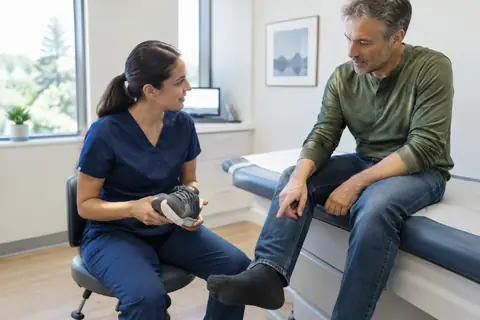
A provider examines your feet and asks about symptoms, footwear and what you have already tried. Most cases are diagnosed by looking at the skin. If the diagnosis is unclear, a simple skin scraping test may be used.
Treatment may include over-the-counter or prescription antifungal medicine. More stubborn or widespread cases may need prescription treatment. MedlinePlus advises continuing antifungal treatment for 1 to 2 weeks after the skin clears to help keep it from coming back. The CDC warns that steroid creams alone can make fungal infections worse.
We also check for bacterial skin infection, which may need different treatment, and share practical prevention tips:
Dry your feet well, especially between the toes
Change socks daily, or more often if they get damp
Wear sandals in locker rooms and shared showers
Do not share towels or shoes
When to seek urgent or emergency care
Read moreClose
Get seen promptly if your foot becomes swollen, warm and red, or if red streaks spread up the leg. These can be signs of a bacterial infection. See a provider if symptoms do not improve after 2 to 4 weeks of self-care, or right away if you have diabetes and notice any foot wound.
Go to the nearest emergency room for a fast-spreading red area with fever or chills.
Call 911 or go to the nearest emergency room for chest pain or pressure, severe trouble breathing, sudden weakness or drooping on one side of the face or body, sudden trouble speaking or seeing, fainting or severe confusion, a seizure, or heavy bleeding.
We work with most major plans, from Blue Cross Blue Shield to Medicare, CountyCare and State of Illinois Benefit Plans. The full list is on our cost and insurance page. Please call (630) 324-6825 to confirm your plan before your visit.
For patients without insurance, we post self-pay urgent care pricing: a general visit starts at $125, with any extra tests explained up front.
Both of our locations are open Monday to Friday, 9 AM to 6 PM, and Saturday and Sunday, 9 AM to 5 PM. The main clinic is at 29 N Cass Ave, Ste A, Westmont, IL 60559. Our second location, inside Jewel-Osco, is at 4 E Ogden Ave, Westmont, IL 60559. Walk-ins are welcome, or check in online before you leave home.
What happens at your visit
Read moreClose
Tell us the storyYour clinician asks how long the rash has been there, what you have tried, and whether you swim, play sports or use a shared shower.
Foot and nail examThe clinician checks the skin between your toes, the soles and the toenails, and looks for cracks, blisters or signs of a bacterial infection.
Confirm the causeMost cases are recognized by sight. If the rash looks unusual or keeps coming back, a skin scraping may be checked for fungus.
Treatment planYou get clear directions on which antifungal to use, how long to keep using it, and what to change at home to stop reinfection.
The American Academy of Dermatology lists these habits to keep athlete's foot from coming back:
Wear shower shoes, flip-flops or sandals at pools, gyms, locker rooms, showers and hotel rooms.
Wash your feet every day with soap and dry them completely, especially between the toes.
Choose socks made of natural or moisture-wicking fabric and change them daily, or sooner if they get damp.
Rotate your shoes so each pair dries out between wears. Synthetic shoes tend to make feet sweatier.
If someone at home has athlete's foot, don't share towels, linens or shoes, and wear shoes where their bare feet have been.
The same fungus can spread to the groin (jock itch), hands or nails. Use a clean towel for your feet and wash your hands after applying cream.
Extra care for diabetes and older adults
Read moreClose
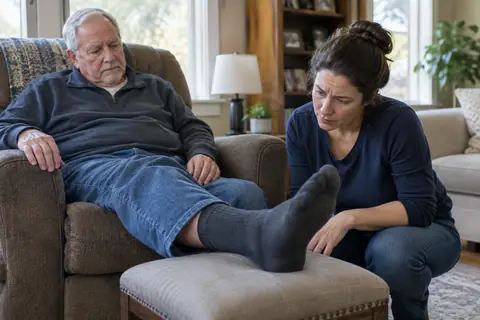
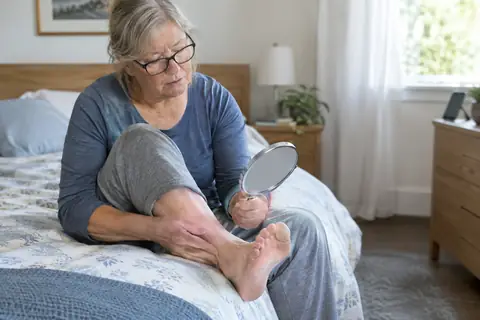
Cracks between the toes give bacteria a way in. If you have diabetes, poor circulation or numb feet, check your feet every day, including between the toes. Use a mirror or ask a family member if you cannot see the soles. Small problems are easier to treat when they are caught early.
Our primary care and diabetes management services can include regular foot checks, and our clinicians can examine any new crack, blister or patch of redness.
Yes. It can spread through shared floors, towels, shoes and skin contact. It can also spread to your own toenails, hands or groin.
Why does it keep coming back?
Stopping treatment too soon and damp footwear are common reasons. Keep treating for 1 to 2 weeks after the skin looks clear.
Should I see someone if I have diabetes?
Yes. People with diabetes should have foot skin problems checked early.
Do I need an appointment?
No. Walk in, or check in online for athlete's foot care .
How long does athlete's foot take to go away?
Many mild cases improve within a few weeks of steady treatment. The skin often looks better before the fungus is fully gone, which is why stopping early leads to repeat infections. Keep using the antifungal for as long as your clinician or the label directs.
Should I throw away my shoes?
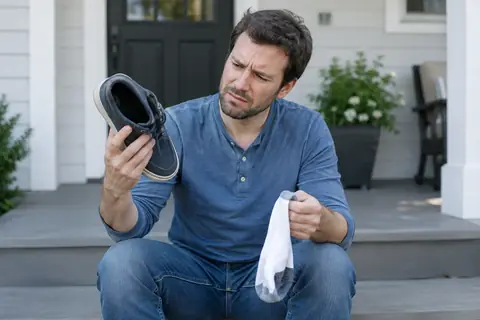
Usually not. Rotate pairs so each one dries completely, wear clean socks every day and wash socks and towels after use. Shoes that stay damp or are badly worn may be worth replacing. Ask your clinician whether an antifungal powder or spray for your shoes makes sense.
Can kids get athlete's foot?
Yes, though it is more common in teens and adults. Kids who swim, play sports or use shared locker rooms are more exposed. A rash on a young child's foot can also be eczema or a reaction to shoes, so an exam helps before treating. See our kids urgent visit page.
Is athlete's foot the same as ringworm?
They are related. Both are tinea infections caused by the same group of fungi. On the feet it is called athlete's foot, on the body it is called ringworm and in the groin it is called jock itch. Learn more on our ringworm treatment page.
“I called the night before and made an appointment. I was seen right away. The workers at the reception desk were efficient. The medical team was excellent! They spent quite a lot of time explaining my medical condition and how to take my meds. I will definitely use them again when I visit my daughter in Hinsdale.”
Mickey B. · October 2024 · Google★★★★★
“Fast and knowledgeable, also looked for related issues to my sprained big toe. Getting better ...”
Chris T. · April 2024 · Google★★★★★
“Staff friendly, seem promptly, medical direct was MD who saw us. Gave us the tests we needed, didn’t hassle for unnecessary tests for sick visit for my son. In and out quickly and happy patients.”