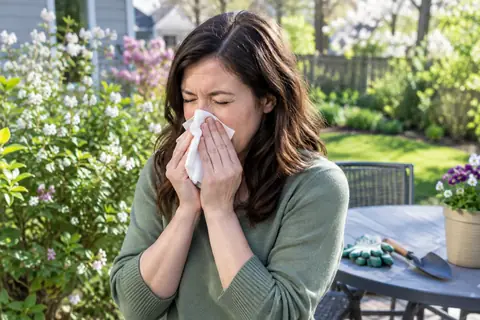
Allergy symptoms: causes, relief and when to get checked
Sneezing, a runny or stuffy nose, and itchy, watery eyes that return each spring or around pets usually point to allergies. Avoiding triggers, saline rinses, antihistamines and nasal steroid sprays control most symptoms. Get checked if relief stops working, you get hives or wheezing, or you can't tell allergies from an infection.
Hay fever affects up to 60 million people in the United States each year, according to the CDC.
Tree and grass pollen are the most common spring triggers, while ragweed and outdoor mold flare in the fall.
MedlinePlus calls nasal corticosteroid sprays the most effective treatment for allergic rhinitis.
Allergies are not contagious and don't cause a fever; a cold often brings thicker mucus and a low fever.
Decongestant nasal sprays should not be used for more than 3 days in a row.
What causes allergy symptoms?
An allergy happens when your immune system overreacts to something that is normally harmless. Your body releases chemicals that cause sneezing, itching and swelling. MedlinePlus notes that allergies often run in families.
Pollen from trees, grasses and weeds such as ragweed
Mold spores, both outdoors and in damp spots indoors
Dust mites in bedding, carpets and soft furniture
Pet dander from cats, dogs and other furry animals
Foods, medicines and insect stings, which can cause hives or more serious reactions
Allergy seasons in the Chicago area
The American College of Allergy, Asthma and Immunology (ACAAI) says tree and grass pollen are the most common spring triggers, and ragweed, other weeds and outdoor mold are common in the fall. In practice, seasonal symptoms can run from spring through early fall. MedlinePlus adds that hot, dry, windy days raise pollen levels, while cool, rainy days lower them. The CDC notes that a changing climate may shift when pollen seasons start and how long they last.
Allergies or a cold? How to tell
Allergies and colds share a runny nose and sneezing, but a few clues set them apart. This comparison is based on ACAAI guidance.
Allergies compared with a common cold
Clue
Allergies
Common cold
Cause
Immune reaction to pollen, dust, mold or pets
A virus
Contagious?
No
Yes
Nasal mucus
Thin and watery
May become thicker or yellowish
Fever
No
Sometimes a low fever
Itchy eyes, nose or throat
Common
Less common
Timing
Starts right after exposure and lasts as long as the exposure
Starts a day or two after exposure and lasts a few days to a week
Most people with seasonal allergies can control symptoms with a few steps. These come from MedlinePlus and ACAAI guidance.
Find your triggerNote when and where symptoms flare: outdoors in spring, around a pet, or in a damp basement.
Keep pollen outClose windows at home and in the car, use air conditioning, and sleep with windows shut during pollen season. Wear sunglasses outdoors.
Rinse your noseA saline nasal wash can help mild symptoms by clearing out pollen and mucus.
Try an antihistamineThese help sneezing, itching and a runny nose. Some cause drowsiness, so don't drive after taking one that makes you sleepy.
Use a nasal steroid sprayMedlinePlus calls these the most effective treatment for allergic rhinitis and says they are generally safe for children and adults.
Go easy on decongestant spraysDon't use decongestant nasal sprays for more than 3 days, or your stuffiness can rebound.
How long to wait
Allergy symptoms last as long as you are around the trigger, so they can go on for weeks during pollen season. MedlinePlus advises seeing a provider when symptoms are severe, when treatments that used to work stop working, or when symptoms don't respond to treatment.
When to visit urgent care for allergy symptoms
Read moreClose
Usually fine at home
Seasonal sneezing that responds to over-the-counter medicine
Mild itchy eyes on high-pollen days
Symptoms you recognize from past years
Come in to urgent care
Severe symptoms, or medicine that has stopped working
Hives or an itchy rash that is spreading, without trouble breathing
Face pressure, thick mucus or fever that may mean a sinus infection
A cough or mild wheeze that flares with pollen
Red eyes with discharge, which may be pink eye
You want to know what you are allergic to
Walk in or book a visit online. The CDC notes that pollen exposure is linked to asthma attacks. Severe reactions are an emergency; the warning signs are listed at the bottom of this page.
What happens at our Westmont, IL clinic
Read moreClose
Urgent Care Center of Westmont, also known as Immediate Care Center of Westmont, sees allergy symptoms in children and adults at two Westmont, IL clinics, open 7 days a week. Our team is led by board-certified physicians.
Questions. When symptoms flare, where you are, pets at home, and what you have already tried.
Exam. Your clinician checks your nose, ears, throat, eyes, lungs and skin to tell allergies from an infection.
Allergy blood testing. Our allergy testing measures your immune response to triggers such as pollen, dust mites, mold, pet dander and some foods.
A treatment plan. Your clinician may recommend over-the-counter options or prescription medicine when appropriate.
ACAAI notes that antibiotics do not help allergic rhinitis, so your clinician will only suggest them if an infection is found. If symptoms are hard to control, allergy shots or tablets from an allergist may help, and we can talk through that next step.
Allergies in children and adults
Read moreClose
Children
Kids with allergies often rub their nose, breathe through their mouth, and have dark circles or puffiness under the eyes. MedlinePlus lists tiredness, irritability and headache as later symptoms, often from poor sleep. Nasal steroid sprays are generally safe for children. Ask a clinician or pharmacist about the right antihistamine and dose for your child's age and weight.
Food allergies need special care. Any reaction to a food that affects breathing or causes swelling of the face or lips is an emergency.
Adults
Adults can develop new allergies, for example after moving or getting a pet. If you take other medicines or have high blood pressure, ask a pharmacist before adding an allergy or decongestant pill. People with asthma should keep their rescue inhaler close during pollen season.
How to prevent allergy flares
Read moreClose
Check the daily pollen forecast and plan outdoor time for cooler, damp or calm days.
Stay indoors with air conditioning on hot, dry, windy days during pollen season.
Keep windows closed at home and in the car.
Control dust mites and mold indoors: wash bedding often and fix damp spots.
Keep pets out of the bedroom if dander is a trigger.
Ask about allergy shots or tablets if symptoms are hard to control. ACAAI says shots are usually given over three to five years.
Allergies cause thin, watery mucus, itchy eyes and no fever, and they last as long as you are around the trigger. A cold is caused by a virus, may bring thicker mucus and a low fever, and usually clears in about a week. Symptoms that return every spring or around pets point to allergies.
Can allergies cause a fever?
No. Hay fever does not cause a true fever, despite its name. ACAAI notes that allergies typically cause a runny nose and itchy eyes without fever, while a cold may bring a low fever. If you have a fever with congestion, you may have a cold, the flu or a sinus infection instead.
Can urgent care help with allergies?
Yes. Urgent care can examine you, tell allergies apart from a sinus infection or cold, and recommend treatment, which may include prescription medicine when appropriate. Urgent Care Center of Westmont also offers allergy blood testing. Severe reactions with trouble breathing or face swelling need 911.
Can allergies cause headaches?
Yes. MedlinePlus lists headache, along with a stuffy nose, clogged ears, tiredness and dark circles under the eyes, as later symptoms of allergic rhinitis. Congestion and poor sleep often play a part. Treating the allergy usually eases the headache. Our headache guide covers other causes if it doesn't.
When is allergy season in Illinois?
Allergy season usually runs from spring through early fall. ACAAI says tree and grass pollen are the most common spring triggers, while ragweed, other weeds and outdoor mold are common in the fall. Hot, dry, windy days raise pollen levels. Year-round symptoms point to indoor triggers such as dust mites, mold or pets.
What allergy medicine works for a stuffy nose?
MedlinePlus calls nasal corticosteroid sprays the most effective treatment for allergic rhinitis, and they are generally safe for children and adults. Antihistamines help sneezing and itching. Decongestant nasal sprays can open a stuffy nose but should not be used for more than 3 days. Ask a clinician which fits you.