Wash any animal bite with soap and water right away, then get it checked. Bites can become infected, may call for a tetanus shot, and sometimes carry a rabies risk. Urgent Care Center of Westmont cleans and assesses bite wounds, reviews your tetanus status and helps you understand your rabies risk.
Wash an animal bite or scratch with soap and water as soon as possible.
The CDC says rabies treatment is nearly 100% effective when it is given after an exposure and before symptoms begin.
In Illinois, bats are the main rabies concern and can be found anywhere in the state.
A healthy dog, cat or ferret that bites someone must be confined and observed for 10 days, according to IDPH.
For a bite, the CDC advises a tetanus booster if your last dose was 5 or more years ago.
How we care for dog and animal bites at our Westmont, IL clinic
Urgent Care Center of Westmont, also known as Immediate Care Center of Westmont, treats dog, cat and other animal bites for children and adults seven days a week. Our team is led by board-certified physicians. Walk in to either Westmont, IL clinic or check in online.
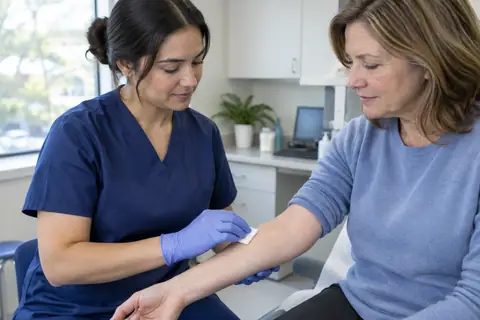
Examine the woundYour clinician checks how deep the bite is and whether nearby tendons, nerves, joints or bones could be hurt. They also check feeling and movement.
Clean it wellThe wound is numbed if needed and cleaned thoroughly. Some bites are closed, and many are safer left open to heal. Your clinician explains which is right for yours. See our cut and laceration care page for how wounds are closed.
Image if neededFor a deep bite near a bone or joint, your clinician may order an X-ray, available only at our 29 N Cass Ave clinic.
Prevent infection and tetanusYour clinician reviews your tetanus history and can recommend treatment, which may include prescription medicine when appropriate to lower the chance of infection.
Review rabies riskYour clinician asks about the animal and, when there is a possible exposure, explains the next steps and works from public health guidance.
First aid for a dog or cat bite
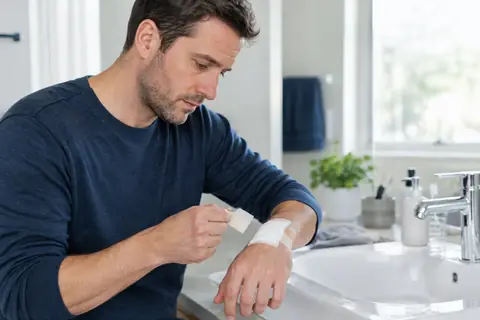
Wash the bite or scratch with soap and plenty of running water right away. MedlinePlus, the CDC and IDPH all list this first.
Press a clean cloth on the wound to slow bleeding.
Cover it with a clean bandage.
If you can do it safely, get the owner's name, phone number and the pet's rabies vaccine status.
Do not try to catch a wild animal yourself. IDPH advises capturing one only if you can avoid any contact.
Get medical care, and keep track of when the bite happened.
Our article on dog and animal bites explains which bites can be handled at urgent care.
Which animal bites need to be seen?
Read moreClose
Have any bite that breaks the skin checked by a clinician. These need prompt care:
Puncture wounds, which are hard to clean deep inside. Cat bites are often punctures.
Bites on the hand, face, foot, or over a joint
Deep, gaping or ragged wounds
Bites from a wild animal, a stray, or a pet with unknown vaccines
Any contact with a bat, even if you do not see a bite
Bites in people with diabetes or a weak immune system
Any bite if your last tetanus shot was 5 or more years ago
MedlinePlus notes that bites are seldom life-threatening, but an infected wound can lead to serious health problems.
Rabies risk after an animal bite in Illinois
Read moreClose
Rabies is a virus that attacks the brain and nervous system. The CDC says it is almost always fatal once symptoms start, but treatment after an exposure is nearly 100% effective if it begins before symptoms. That treatment includes wound care, rabies immune globulin and a series of rabies vaccines.
Rabies risk by animal (based on IDPH guidance)
Animal
What usually happens next
Healthy pet dog, cat or ferret
The animal is confined and observed for 10 days. If it stays healthy, rabies shots are usually not needed.
Bat
Any bite, scratch or close contact needs a medical and health department review. Do not throw the bat away.
Raccoon, skunk, fox, coyote or woodchuck
Treated as a possible exposure. The animal should be tested if it can be captured safely.
Stray or unvaccinated pet that cannot be found
Your clinician and the local health department weigh your risk.
IDPH says a bat found in a room with a sleeping person, an unattended young child, or someone impaired can be an exposure even without a visible bite. Contact a doctor or the health department.
Do I need a tetanus shot after a dog bite?
Read moreClose
The CDC treats bites as a higher-risk wound for tetanus. Its guidance for people who have finished their childhood tetanus series:
Last tetanus shot less than 5 years ago: no booster needed.
Last tetanus shot 5 or more years ago: a booster is recommended.
Unknown or incomplete tetanus history: vaccination is recommended, and some people also need tetanus immune globulin.
Reporting a dog bite in Illinois and DuPage County
Read moreClose
IDPH advises that all animal bites be reported to local animal control, and that the local health department and animal control be notified right away after a bite. Reporting lets officials make sure the animal is observed, which can spare you rabies shots you do not need.
DuPage County Animal Services says doctors, veterinarians, police officers and anyone involved in a bite can report it. The county handles animal complaints in unincorporated areas. If you live inside a village or city, such as Westmont, the county advises contacting your local police department for animal concerns. Have this ready:
Date, time and place of the bite
The animal's description, and the owner's name and contact details if known
The pet's rabies vaccine status or tag number
Where the animal is now
Signs of infection and what to watch after a bite
Read moreClose
What to watch after an animal bite
Time after the bite
What to do
First day
Keep the wound clean and covered. Take any prescribed medicine exactly as directed.
Each day after
Check for spreading redness, warmth, swelling, pus, worse pain or fever. Come back if you see them.
Day 10
For a pet under observation, this is when the 10-day period ends.
Weeks to months
The CDC says rabies can take weeks to months to cause symptoms. Finish any rabies shots on schedule.
Pain that keeps getting worse, a hand that is hard to move, or swelling near a joint after a bite should be checked again right away. Learn more in our cuts and bleeding guide.
Protecting children and preventing bites
Read moreClose
Young children may not notice when a dog is scared or upset, so supervision matters, even with the family pet. MedlinePlus recommends these steps:
Supervise young children closely around all animals, including family pets.
Teach kids not to pet, handle or feed animals they do not know.
Keep dogs, cats and ferrets up to date on rabies vaccines.
Spay or neuter dogs, which can make them less aggressive.
Never touch a bat or a wild animal, even one that looks sick or hurt.
Cost and insurance for bite care
Read moreClose
We accept most major insurance plans, including Blue Cross Blue Shield, Cigna, Humana, UnitedHealthcare and Medicare. Call (630) 324-6825 to confirm your plan, or see our cost and insurance page. Self-pay general visits start from $125.
Yes, for any bite that breaks the skin. A clinician can clean the wound well, decide whether it should be closed or left open, check your tetanus status and review your rabies risk. Bites to the hand, face or a joint, and all cat bites, deserve prompt care because they are more likely to cause problems.
Do I need a tetanus shot after a dog bite?
Maybe. The CDC treats bites as higher-risk wounds. If your last tetanus shot was 5 or more years ago, a booster is recommended. If you do not know your history or never finished the series, you likely need vaccination now. Our clinicians can check your record.
Do I need rabies shots after a dog bite?
Not usually, if the dog is a healthy, vaccinated pet that can be watched. IDPH says a healthy dog, cat or ferret that bites someone must be confined and observed for 10 days. Bites from wild animals, bats or strays that cannot be found need a closer review with the health department.
What are the signs a dog bite is infected?
Watch for redness that spreads, warmth, swelling, pus, pain that gets worse instead of better, or a fever. Red streaks moving away from the wound or chills are more serious. Come back right away if you notice any of these after a bite.
Do I have to report a dog bite in Illinois?
IDPH advises that all animal bites be reported to local animal control. In DuPage County, doctors, veterinarians, police and anyone involved can report a bite to DuPage County Animal Services. Reporting helps make sure the animal is observed for rabies.
Are cat bites worse than dog bites?
Cat bites are often small puncture wounds that look minor but go deep and are hard to clean. That makes them more likely to become infected. Any cat bite that breaks the skin should be seen by a clinician, even if it looks small.