Walk-in care for cuts and lacerations in Westmont, IL. Urgent Care Center of Westmont cleans and closes wounds with stitches, staples or skin adhesive when needed, and checks whether you need a tetanus shot. Same-day walk-in visits, no appointment needed.
Most small scrapes heal at home. A cut that is deep, gaping, on the face, or still bleeding after steady pressure should be checked by a medical provider. Urgent Care Center of Westmont, also known as Immediate Care Center of Westmont, treats cuts and lacerations for children and adults in Westmont, IL, with no appointment needed.
If bleeding is severe or will not stop after about 10 minutes of firm pressure, call 911. For other cuts, walk in to either of our locations or check in online first.
Key facts
Many clean cuts can still be closed up to about 18 hours after the injury, and head wounds up to about 24 hours, so it is worth getting checked even if some time has passed (AAFP).
Stitches on the face usually come out in 3 to 5 days, while stitches on the legs, hands or feet often stay 10 to 14 days (AAFP).
Keep stitches or staples clean and dry for the first 24 to 48 hours (MedlinePlus).
A dirty or deep wound may need a tetanus booster if your last dose was more than 5 years ago (AAFP).
When a cut needs medical care
MedlinePlus advises contacting a provider right away for:
A large or deep wound, or one where you can see bone
A cut on the face deeper than about a quarter inch, which may need stitches
An animal or human bite
A puncture from a nail, a fishhook, or a rusty object
Something stuck in the wound
Signs of infection: warmth, redness, swelling, drainage or fever
A wound when your last tetanus shot was more than 10 years ago
First aid before you come in
Wash your hands. Press a clean cloth firmly on the cut to slow bleeding. Rinse a minor wound with soap and water. Cover it with a clean bandage. Do not dig for objects stuck deep in the skin.
How we treat cuts at our Westmont, IL clinic
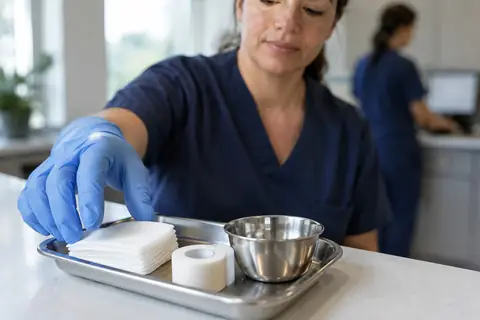
A provider looks at the size, depth and location of the wound and checks feeling and movement near it. The area is numbed if needed, then cleaned well to lower the chance of infection.
Depending on the wound, it may be closed with stitches (sutures), staples, or medical skin adhesive. Some wounds are safer left open to heal. We then dress the wound and explain how to care for it at home.
Tetanus vaccination when your history shows you need it
Written wound-care instructions
Wound checks and stitch removal at our clinic
The CDC notes that tetanus bacteria enter the body through broken skin, and that wounds contaminated with dirt, puncture wounds and deep injuries deserve a provider's review.
Kitchen, garage and yard injuries bring us patients from Clarendon Hills, IL, Willowbrook, IL, Oak Brook, IL and Darien, IL. Willowbrook, IL is about 2.7 miles southeast of our Cass Ave clinic (straight-line), and Oak Brook, IL is about 2.9 miles northeast.
We take most major insurance plans, such as Blue Cross Blue Shield, Cigna, Humana, UnitedHealthcare and Medicare. Call (630) 324-6825 to confirm your plan, and see our insurance and cost information.
Without insurance, you can use our flat, upfront self-pay urgent care pricing. A general visit starts at $125. Ask us about added costs for procedures before treatment begins.
Stitches, staples or skin glue?
Read moreClose
Your clinician chooses how to close a cut based on its depth, location and how clean it is.
Common ways to close a cut
Closure
Often used for
Good to know
Stitches (sutures)
Most cuts, especially deeper or jagged ones and cuts over joints
Need a return visit for removal unless they dissolve
Staples
Scalp wounds and some straight cuts on the body
Removed later with a small tool
Skin glue (tissue adhesive)
Clean, straight, shallow cuts under little tension that are less than 12 hours old
Not used across joints, on bites or on dirty wounds; peels off on its own
Adhesive strips
Small, straight cuts whose edges sit together
Fall off as the skin heals
When do stitches come out?
Read moreClose
Typical removal times (AAFP, based on expert opinion)
Location
Typical removal
Face
3 to 5 days
Scalp or arms
7 to 10 days
Trunk, legs, hands or feet
10 to 14 days
Palms or soles
14 to 21 days
Your clinician gives you a removal date based on your wound. We remove stitches at our Westmont, IL clinic; check in online when it is time.
Caring for your wound at home
Read moreClose
MedlinePlus offers this advice for cuts closed with stitches or staples:
Keep the area clean and dry for the first 24 to 48 hours. With staples, keep it completely dry during that time.
After that, gently wash once or twice a day with cool water and soap. Clean near the stitches without scrubbing them, then pat dry.
Change the bandage as instructed and keep your hands clean when you do.
Keep activity light so the wound does not pull open.
For a scalp wound, you can shampoo gently.
Use acetaminophen as directed for soreness.
Come back for a wound check if you notice
More redness, pain or yellow pus around the cut
A fever of 100°F or higher
The wound splitting open, or stitches coming out early
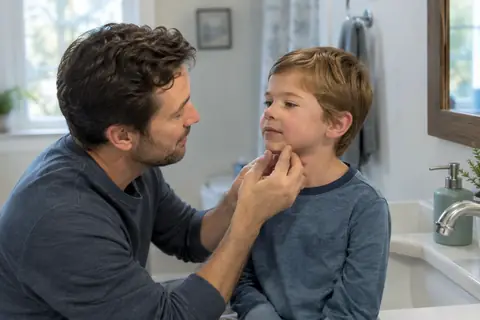
Kids often cut their chin, forehead and hands. Stay calm, press firmly on the cut with a clean cloth and bring your child in if the edges gape or the cut is on the face. Skin glue or strips can sometimes close a small, clean cut without stitches, which many children find easier.
Deep, gaping or long cuts, cuts on the face, and cuts that keep bleeding often need closure. A provider can tell after examining the wound.
Do I need a tetanus shot?
If your last tetanus shot was more than 10 years ago, you likely need one. Some dirty or deep wounds may call for a booster sooner. We check your history.
Can you remove my stitches later?
Yes. We remove stitches and check how the wound is healing.
Should I go to the ER instead?
Yes, if bleeding will not stop, the area is numb or cannot move, or bone is showing. Call 911.
How long after a cut can you get stitches?
Sooner is ideal, but there is no strict cutoff. AAFP notes that clean wounds may be closed up to about 18 hours after the injury, and head wounds up to about 24 hours. Dirty wounds and bites are handled differently. If time has passed, come in anyway so a clinician can decide.
Can I shower with stitches?
Usually after the first 24 to 48 hours. MedlinePlus advises gentle washing with cool water and soap, then patting the area dry. Avoid soaking the wound in a bath, hot tub or pool until your clinician says it is healed enough, and follow the instructions you get at your visit.
Will my cut leave a scar?
Most cuts leave some mark, but careful closure and wound care help it fade. Keep the wound clean, don't pick at scabs, and once the skin has closed, protect it from the sun with clothing or sunscreen. Scars often keep fading for months.
Do I need stitches for a small cut on my finger?
Not always. Small, shallow cuts whose edges stay together often heal well with a bandage. A finger cut that gapes open or looks deep should be checked, because tendons and nerves sit close to the skin there.
“The staff was very professional Easy to talk to and very knowledgeable. I would recommend. & return 5 ⭐️”
Robert J. · March 2026 · Google★★★★★
“Alexa, Kelly, and the young man in the front desk are very kind! This is the first time everyone from a clinic is treating me with honest concern and kindness! Thank you all!!! God bless.”
Maricarmen C. · January 2026 · Google★★★★★
“Very friendly and helpful service! They were packed with it being holiday time, but they were very efficient.”