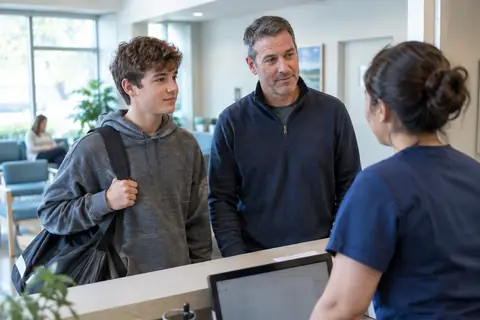
Walk-in fracture evaluation in Westmont, IL for suspected broken bones and sprains. Urgent Care Center of Westmont examines the injury, takes X-rays at our 29 N Cass Ave clinic and splints when needed. Same-day walk-in visits, no appointment needed.
A broken bone often causes pain, swelling, bruising and trouble moving the injured part. It can be hard to tell a fracture from a bad sprain without an X-ray. Urgent Care Center of Westmont, also known as Immediate Care Center of Westmont, evaluates suspected fractures in Westmont, IL, seven days a week.
Important: on-site X-ray is available only at our main clinic, 29 N Cass Ave, Ste A. If you think you have a broken bone, go to that location rather than our clinic inside Jewel-Osco. Walk in or check in online first.
We evaluate suspected broken fingers, toes, wrists and ankles, and sprains that may need an X-ray.
Key facts
Finger fractures may heal in 3 to 4 weeks, while many other fractures take 6 to 8 weeks or longer (AAOS).
Pain often eases before the bone is fully strong, so keep following your activity limits even when you feel better.
Keep a splinted or casted arm or leg raised above heart level for the first 2 to 4 days to control swelling (AAOS).
On-site X-ray is available only at our main clinic, 29 N Cass Ave, Ste A, Westmont, IL.
Signs of a possible fracture
MedlinePlus lists these signs of a broken bone:
A limb or joint that looks out of place or misshapen
Swelling, bruising or bleeding
Intense pain
Numbness and tingling
Limited or no ability to move the limb
The NHS notes that a broken, dislocated or badly sprained wrist can look alike, and you will probably need an X-ray to know.
First aid on the way
Keep the injured part still. Support it with a sling or padding. Apply ice wrapped in a cloth to reduce swelling, and raise the limb if you can do it without pain.
How we evaluate fractures at our Westmont, IL clinic
A provider asks how the injury happened and examines the area, checking swelling, tenderness, blood flow and feeling. If a fracture is possible, we take X-rays at our Cass Ave clinic.
We explain what the images show. Depending on the injury, we may place a splint, wrap or sling and give pain-control and home-care advice. Some fractures need a specialist. When that is the case, we explain why and help you plan an orthopedic follow-up.
We accept most major plans, including Blue Cross Blue Shield, UnitedHealthcare, Medicare and State of Illinois Benefit Plans. Call (630) 324-6825 to confirm. See our cost and insurance page.
Without insurance, review our self-pay urgent care pricing. A general visit starts at $125; ask us about X-ray and splint costs before treatment.
What happens at your visit
Read moreClose
Come to Cass AveFor a possible broken bone, go to 29 N Cass Ave, Ste A, where X-ray is available, or check in online first.
Tell us what happenedHow you fell or were hit helps your clinician know which bones to check.
ExamThe clinician checks swelling, tenderness, blood flow, feeling and movement above and below the injury.
X-rayIf a fracture is possible, X-ray imaging is taken at our Cass Ave clinic, and we go over the images with you.
Treatment and follow-upYou may get a splint, wrap or sling, a pain plan and instructions. If an orthopedic specialist is needed, we explain why and when.
Types of fractures
Read moreClose
Common fracture types (AAOS OrthoInfo)
Type
What it means
Stable (non-displaced)
The broken ends still line up and are barely out of place
Open (compound)
Bone breaks through the skin, or a wound reaches the break
Transverse
A straight, side-to-side break line
Oblique
An angled break line
Comminuted
The bone breaks into three or more pieces
Stress
A tiny crack from repeated force, common in runners and athletes
Age matters too. Children's growing bones can bend or buckle instead of snapping cleanly. In older adults, osteoporosis can weaken bones enough that a simple fall causes a break. Our sprain and strain treatment page and joint pain guide cover injuries that look similar.
Healing timeline
Read moreClose
A general guide; your bone and age change the timing
Stage
What to expect
First few days
Swelling and pain are highest; raise the limb, use ice and rest
Weeks 1 to 3
Pain eases; the splint or cast stays on; follow-up visit or X-ray as advised
Weeks 3 to 8
Many bones knit together; fingers may heal in 3 to 4 weeks, others in 6 to 8
After the cast or splint
Stiffness and weakness are common; exercises or rehab help restore motion
AAOS notes that healing depends on the injury, your age, other health problems and how closely you follow medical advice. Smoking and alcohol weaken bones and can slow recovery.
Splint and cast care at home
Read moreClose
The American Academy of Orthopaedic Surgeons recommends:
Raise the injured arm or leg above heart level for the first 2 to 4 days, using pillows.
Gently move your uninjured fingers or toes often to prevent stiffness.
Use ice in a dry plastic bag or ice pack wrapped loosely around the splint or cast at the level of the injury.
Keep it dry. Cover it with two layers of plastic or a waterproof shield to bathe, and never put it under water.
Don't push objects inside to scratch an itch, and don't put powder or deodorant inside.
Don't walk on a walking cast until it has hardened.
Call us or your orthopedic doctor if pain or tightness gets worse, or you notice numbness, tingling, burning or new swelling below the cast.
Some fractures need an orthopedic doctor. We will tell you if yours does.
Should I go to the ER for a broken bone?
Yes, if bone is through the skin, there is heavy bleeding, the limb is cold or blue, or a hip, pelvis, thigh, neck or back injury is suspected.
Can you walk on a broken foot or ankle?
Sometimes, which is why walking does not rule out a fracture. Some people can put weight on a small break, especially in the foot. If walking hurts a lot, or there is swelling and tenderness right over the bone, get an X-ray. Read can you move your ankle if it's fractured?
How long does a broken bone take to heal?
It depends on the bone and the person. AAOS says finger fractures may heal in 3 to 4 weeks, while others take 6 to 8 weeks, several months or longer. Pain often stops before the bone is fully strong, so follow your clinician's advice on when to return to normal activity.
Do all fractures need a cast?
No. AAOS notes that some fractures are treated with a functional cast or brace that allows controlled movement, and some small, stable breaks may only need a splint. Others need surgery to line the bones up. Your clinician explains the options after the X-ray.
Can a hairline fracture heal on its own?
A hairline or stress fracture often heals with rest and protection, but it still needs a diagnosis. Walking or training on it can make it worse. AAOS says stress fractures come from repeated force and are common in athletes in high-impact sports.
“Fast and very nice and efficient people there. I appreciated their attention to detail.”
J G. · May 2026 · Google★★★★★
“This office was absolutely amazing. The staff was so kind and so patient with me. I become very anxious when physical pain or discomfort is happening due to some personal quirks, and everyone was very kind and supportive and just made me feel safe and answered all my questions and concerns. Thank you so much!”
Alma S. · March 2026 · Google★★★★★
“Appreciated the quick service, friendliness, and knowledge of the medical staff. We have now been here multiple times because of great experiences.”