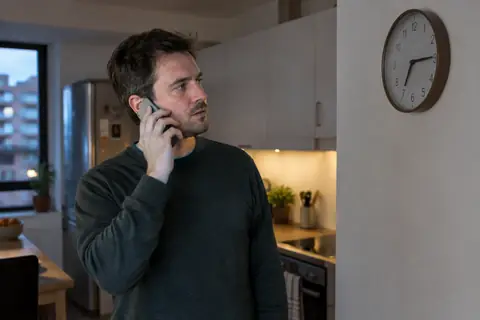
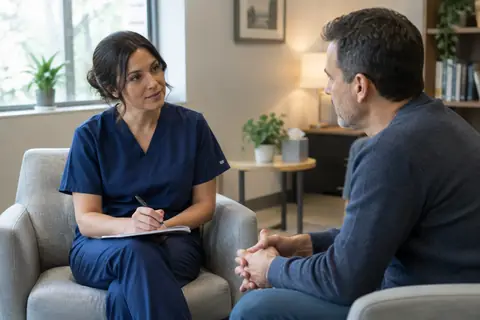
Confidential HIV testing at Urgent Care Center of Westmont in Westmont, IL. Walk in during open hours, speak privately with our team and get clear guidance on your result, follow-up and prevention.
The CDC recommends that everyone ages 13 to 64 get tested for HIV at least once, and that people with ongoing risk test at least once a year. At Urgent Care Center of Westmont in Westmont, IL, also known as Immediate Care Center of Westmont, you can walk in for a private, discreet HIV test and talk with our team about your results and next steps.
If you think you were exposed to HIV in the last 72 hours, do not wait for a test. The CDC says medicine called PEP (post-exposure prophylaxis) must be started within 72 hours to prevent HIV. Call us right away at (630) 324-6825, or go to the nearest emergency room.
Key facts
About two-thirds of people get flu-like symptoms 2 to 4 weeks after getting HIV, but some have none (HIV.gov).
PrEP lowers the risk of getting HIV from sex by about 99% when taken as prescribed (HIV.gov).
People with HIV who take treatment and keep an undetectable viral load do not pass HIV to partners through sex.
A negative HIV test is needed before starting PrEP, and testing continues while you take it.
Why HIV testing matters and who should test
HIV.gov notes that knowing your status helps you make informed decisions about your health and protect your partners. The CDC recommends testing for:
Everyone ages 13 to 64, at least once
Anyone being tested or treated for another STI
People with a new partner or more than one partner since their last test
Gay, bisexual and other men who have sex with men, at least yearly; the CDC notes some may benefit from testing every 3 to 6 months
Pregnant people, at the first prenatal visit
How HIV testing works at our Westmont, IL clinic
Your visit starts with a private conversation about any recent exposures and your testing history. The provider will recommend the right test and explain what the result can and cannot tell you.
The window period
No HIV test can detect HIV right after exposure. According to the CDC, the window periods are about:
10 to 33 days for a nucleic acid test (NAT)
18 to 45 days for a lab antigen/antibody blood test
18 to 90 days for a rapid antigen/antibody test
23 to 90 days for an antibody test
If you test negative but had a possible exposure within the window period, you should test again after it ends.
Understanding your result
HIV.gov explains that a positive result needs a follow-up test to confirm it. If HIV is confirmed, the provider will help connect you with HIV care. If you test negative, you can ask about ways to lower your risk, including PrEP and condoms.
You can also ask to be tested for chlamydia, gonorrhea, hepatitis or other STIs during the same visit.
When to seek emergency or urgent help
Read moreClose
A possible HIV exposure is time-sensitive. The CDC says PEP must start within 72 hours and is taken daily for 28 days. You can get PEP from a health care provider, an emergency room or an urgent care center. Call us first to ask, or go to the nearest emergency room.
Call 911 for chest pain, trouble breathing, confusion, signs of a stroke or severe bleeding.
Related services and nearby communities
Read moreClose
Other confidential tests patients often combine with an HIV test:
Walk-ins are welcome at both of our locations: the main clinic at 29 N Cass Ave, Ste A, Westmont, IL 60559, and our second location inside Jewel-Osco at 4 E Ogden Ave, Westmont, IL 60559. Both are open Monday to Friday, 9 AM to 6 PM, and Saturday and Sunday, 9 AM to 5 PM. Call (630) 324-6825, or check in online before you arrive.
We accept most major plans, including Blue Cross Blue Shield (PPO), BCBS Advocate Good Samaritan (HMO), Cigna, Humana, UnitedHealthcare, Medicare, Meridian and CountyCare. Coverage varies, so please call to confirm your plan. Read more on our cost and insurance page.
No insurance? Self-pay patients get flat, upfront pricing, with a general visit from $125. Ask about the price of any tests before they are done. See self-pay urgent care pricing.
What happens at your visit
Read moreClose
Check inWalk in or check in online. You discuss the reason for your visit one-on-one with your clinician.
Private conversationYour clinician asks about the date of any possible exposure and your last test. These questions are routine and help choose the right test.
Your sampleA blood sample is collected for the test your clinician recommends.
Other tests if you want themMany people add chlamydia, gonorrhea, syphilis or hepatitis testing. See STD testing.
Results and preventionYour clinician explains how you will get your result and talks through prevention options such as PrEP and condoms.
Early HIV symptoms
Read moreClose
HIV.gov says about two-thirds of people have flu-like symptoms within 2 to 4 weeks of getting HIV. They can last a few days to several weeks:
Fever and chills
Rash
Night sweats and muscle aches
Sore throat and tiredness
Swollen lymph nodes
Mouth sores
These symptoms have many other causes, and some people with HIV have no symptoms at all. The only way to know is to get tested.
Cuts the risk of HIV from sex by about 99% when taken as prescribed
Needs an HIV test before starting and regular tests after
PEP (after exposure)
For a possible exposure in the last 72 hours
Must be started within 72 hours
Taken every day for 28 days
If exposures keep happening, ask about PrEP instead
HIV.gov says people who should consider PrEP include those who have a partner with HIV, don't always use condoms, recently had an STI, or have needed PEP more than once. Ask your clinician whether PrEP fits you and how to get started.
Living well with HIV today
Read moreClose
HIV care has changed a great deal. HIV.gov explains that HIV medicine, called antiretroviral therapy, taken as prescribed can lower the virus to an undetectable level. People who keep an undetectable viral load can live long, healthy lives and do not pass HIV to partners through sex.
If your test is positive, a follow-up test confirms it, and our team can help you connect with an HIV care provider. Getting into care early protects your health and your partners.
It depends on the test. The CDC says a nucleic acid test can detect HIV about 10 to 33 days after exposure, and other tests take longer. If you were exposed in the last 72 hours, ask about PEP first.
Is HIV testing confidential?
Yes. Your test and results are part of your private medical record. You can ask our team about privacy when you check in.
What happens if my test is positive?
A positive result needs a follow-up test to confirm it. If HIV is confirmed, our team can help you connect with a provider for HIV care.
How often should I get tested?
Everyone ages 13 to 64 should test at least once. People with ongoing risk should test at least once a year, and some may benefit from testing every 3 to 6 months.
Can you test positive for HIV and not have it?
It is uncommon, but it can happen. That is why every positive screening result is confirmed with a follow-up test before a diagnosis is made. Try not to make decisions based on one screening result. Your clinician explains what your result means and what comes next.
Does a regular blood test check for HIV?
No. Routine blood work, such as a blood count or metabolic panel, does not test for HIV. Ask for an HIV test by name, or say yes when your clinician offers one. CDC recommends that everyone ages 13 to 64 be tested at least once.
Who should consider PrEP?
HIV.gov lists HIV-negative people who have had anal or vaginal sex in the past 6 months and have a partner with HIV, don't always use condoms or recently had an STI. People who inject drugs and share equipment, and people who have needed PEP more than once, should also ask about it.
What are the first signs of HIV?
Early signs are often flu-like: fever, chills, rash, night sweats, muscle aches, sore throat, tiredness, swollen lymph nodes or mouth sores, usually 2 to 4 weeks after infection. Many people have no symptoms. HIV.gov says the only way to know for sure is to get tested.
“I sprained my ankle so I went looking for an urgent care in my area. I came to this one, and I’m glad I did because everyone was nice and thoughtful! It was quick and simple process and I’d definitely recommend to anyone who needs help.”
Yahia H. · July 2026 · Google★★★★★
“Everyone was so comforting, and spoke to me intelligently. The cost was very manageable. I will be returning for future health needs!”
Rumpel F. · June 2026 · Google★★★★★
“The staff was very professional Easy to talk to and very knowledgeable. I would recommend. & return 5 ⭐️”