Burns: first aid, burn degrees and when to get care
Cool a burn under cool running water right away, then cover it loosely with a clean dressing. Red, painful burns and small blistered burns usually heal at home or with urgent care. Deep burns, larger blistered burns, and burns on the face, hands, feet, groin or a major joint need prompt medical care.
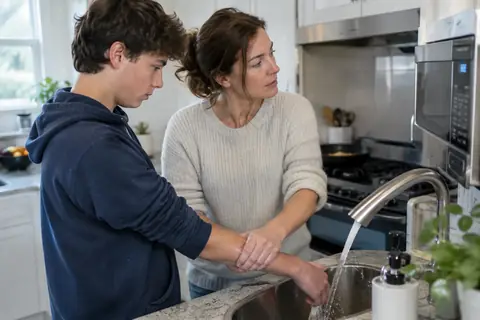
Run cool, not icy, water over a fresh burn; MedlinePlus advises 5 to 30 minutes.
Never put ice, butter or oil on a burn, and don't pop blisters.
MedlinePlus counts a blistered burn as minor only if it is under 2 to 3 inches wide and not on the face, hands, feet, groin, buttocks or a major joint.
A minor burn that still hurts after 48 hours, or shows signs of infection, should be checked.
Setting your water heater to 120°F or lower helps prevent scalds in young children.
What causes most burns?
Most burns happen at home, and most are small. Cleveland Clinic lists the common causes:
Heat: hot liquids and steam, stovetops, ovens, grills, irons and curling irons
Sun: time outdoors without enough protection
Chemicals: cleaning products, pool supplies and building materials
Electricity: damaged cords, outlets, car batteries and lightning
Friction: road rash from a bike or scooter fall, or rubbing on carpet
In the Chicago area, summer brings grill and fireworks burns. Winter brings burns from space heaters, radiators, fireplaces and hot drinks spilled on small children.
How to tell burn degrees apart
Doctors now describe burns by how deep they go, but most people still use degrees. Here is how they compare, based on Cleveland Clinic and MedlinePlus.
Burn depth at a glance
Type
Skin affected
What it looks like
Typical healing
Superficial (first-degree)
Top layer only
Red, painful, may swell or peel, no blisters
A few days, usually no scar
Partial-thickness (second-degree)
Top and second layers
Blisters, pain, color or texture change
Up to about three weeks, often a faint scar
Full-thickness (third-degree)
All layers, into the fat below
White, ashen gray, charred or leathery; may feel numb
More than three weeks, with scarring
A burn that has stopped hurting is not always a good sign. Numb skin can mean the burn went deep enough to damage nerve endings.
First aid for a burn, step by step
Read moreClose
What you do in the first few minutes affects how deep the burn ends up. Heat keeps working in the skin after the source is gone.
Stop the burningMove away from the heat. Take off clothing soaked in hot liquid unless it is stuck to the skin. Remove rings or watches near the burn before swelling starts.
Cool itRun cool, not ice-cold, water over the burn or soak it. MedlinePlus advises 5 to 30 minutes.
Cover it looselyUse a dry, sterile dressing or a clean cloth. Protect the burn from rubbing and pressure.
Ease the painIbuprofen or acetaminophen can help. Do not give aspirin to anyone under 19.
Leave blisters aloneBroken blisters are more likely to get infected. Let them break on their own.
Think about tetanusThe CDC lists burns among wounds where a booster is advised if your last tetanus shot was 5 or more years ago.
What not to put on a burn
Skip ice, butter, oil, grease, mustard, toothpaste, powder and other home remedies. These can trap heat, irritate the skin or slow healing. For a chemical splash, rinse with plenty of water and call Poison Help at 1-800-222-1222.
When should a burn be seen at urgent care?
Read moreClose
MedlinePlus calls a burn minor if it is first-degree, or if it is second-degree, smaller than 2 to 3 inches wide, and not on the face, hands, feet, groin, buttocks or over a major joint. Minor burns are a good fit for home care or urgent care.
Usually fine at home
Red, painful skin without blisters
A quick touch on a pan or curling iron
Pain that eases each day
No signs of infection
Come in to urgent care
A small blistered burn that needs cleaning and a dressing
Any blistered burn on a young child or older adult
A minor burn that still hurts after 48 hours
Pus, fever, more pain or red streaks
A burn that isn't improving or looks worse after a few days
Urgent Care Center of Westmont, also known as Immediate Care Center of Westmont, treats minor burns for children and adults at two Westmont, IL clinics, open 7 days a week. Our team is led by board-certified physicians.
Assessment. Your clinician checks how deep and how large the burn is and where it is on the body.
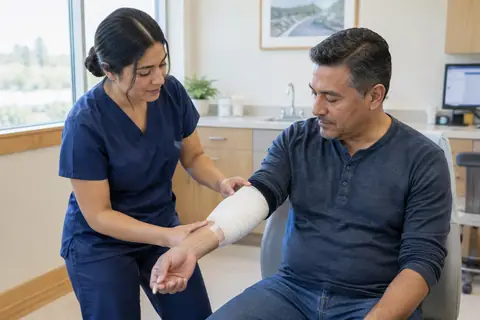
Cleaning and dressing. The burn is gently cleaned and covered with a suitable dressing.
Tetanus check. If you are due, we can give a tetanus booster through our immunizations service.
A home-care plan. You learn how to change the dressing, control pain and spot infection. Your clinician may recommend prescription medicine when appropriate.
Follow-up. We can recheck the burn to make sure it is healing.
Young children have thin skin, so a hot drink or bath water can burn them quickly. The American Academy of Pediatrics (AAP) says to call your pediatrician for any burn deeper than a superficial one, or if redness and pain last more than a few hours.
Cool the burn with cool water, just as you would for an adult.
Cover it with sterile gauze or a clean, dry cloth if it isn't oozing.
Watch for infection at home: more redness or swelling, a bad smell or drainage.
MedlinePlus advises that children, older adults and people with weak immune systems be seen promptly for burns. Older skin is thinner and may heal more slowly. A burn that leaves an itchy or irritated rash around it can be checked through our skin rash evaluation service.
How to prevent burns at home
Read moreClose
Most burns in children are preventable. These tips come from the AAP, MedlinePlus and Cleveland Clinic.
Set your water heater to 120°F or lower, and test bath water before a child gets in.
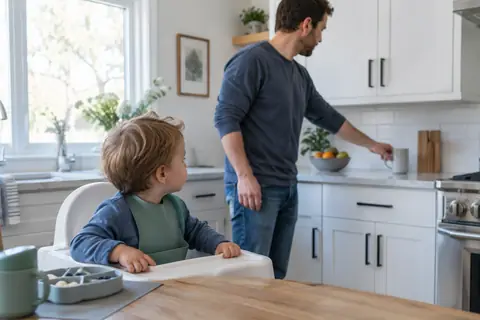
Don't hold a baby while carrying a hot drink. Keep hot liquids away from table edges.
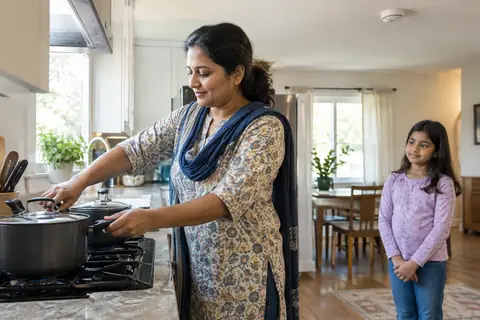
Turn pot handles toward the back of the stove and keep kids out of the kitchen while cooking.
Screen fireplaces, wood stoves, space heaters and radiators.
Install smoke alarms on every floor and practice a family fire escape plan.
Skip consumer fireworks. The AAP notes a sparkler tip can reach about 1,800°F.
Limit sun between 10 a.m. and 4 p.m., and use protective clothing and sunscreen.
Yes, for a small blistered burn, a burn on a child or older adult, or a minor burn that still hurts after 48 hours or looks infected. Urgent care can clean and dress the burn and check your tetanus status. Deep burns, large blistered burns, and chemical or electrical burns need the nearest emergency room.
How long should you run a burn under cool water?
MedlinePlus advises running cool water over a burn or soaking it for 5 to 30 minutes. Use cool water, not ice or ice water, which can damage the skin further. Cooling helps most when you start right away, so do it before you look for a bandage or medicine.
Should I pop a burn blister?
No. Leave burn blisters alone. Cleveland Clinic and MedlinePlus both warn that breaking blisters raises the risk of infection. Cover the blister loosely with a clean, non-stick dressing. If a blister breaks on its own, keep the area clean and covered, and watch for redness, pus or fever.
What's the difference between a first- and second-degree burn?
A first-degree burn affects only the top layer of skin and causes redness and pain without blisters. A second-degree burn goes into the next layer and causes blisters. First-degree burns usually heal in a few days, while second-degree burns can take up to about three weeks and may leave a faint scar.
What should you not put on a burn?
Don't put ice, butter, oil, grease, toothpaste, mustard or powder on a burn. These home remedies can trap heat, irritate damaged skin or slow healing. Cool water is the right first step. After that, a clean, dry dressing and over-the-counter pain medicine are usually enough for a minor burn.
Do I need a tetanus shot for a burn?
You might. The CDC groups burns with deep and dirty wounds, where a booster is advised if your last tetanus shot was 5 or more years ago. If you don't know when you last had one, a clinician will usually recommend a booster. Urgent Care Center of Westmont can check and give it.
“Very happy with my visit ☺️. Should have checked you out much earlier. You x-rayed and correctly diagnosed my broken foot and sent me on to an orthopedic surgeon. Thanks...”
Herbert K. · September 2026 · Google★★★★★
“awesome experience here - definitely where i’ll go when in need. super quick and they called me back when they said they would.”
JZ · June 2026 · Google★★★★★
“Fast and very nice and efficient people there. I appreciated their attention to detail.”